Custom Aluminum Alloy Casting Parts
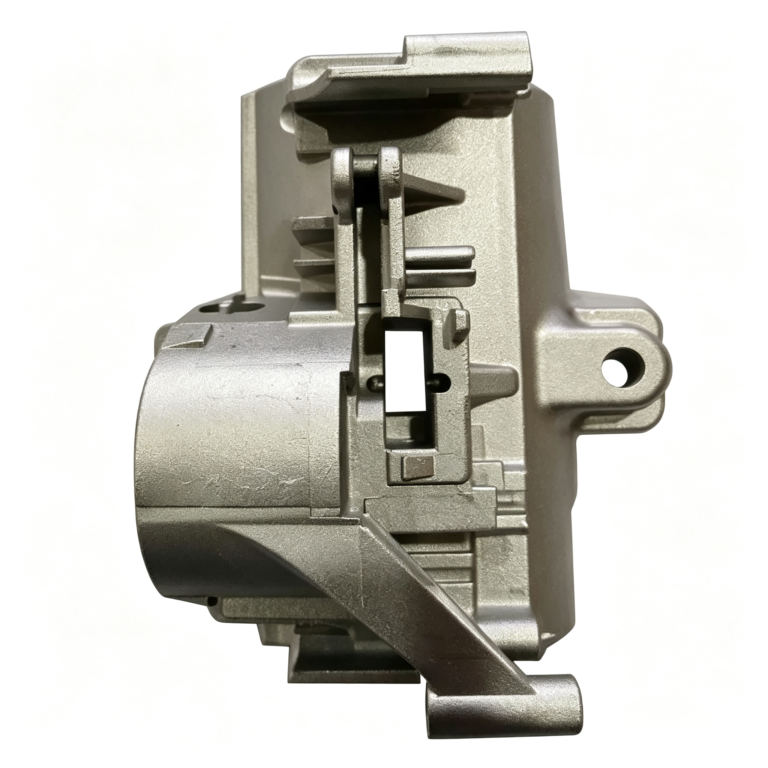
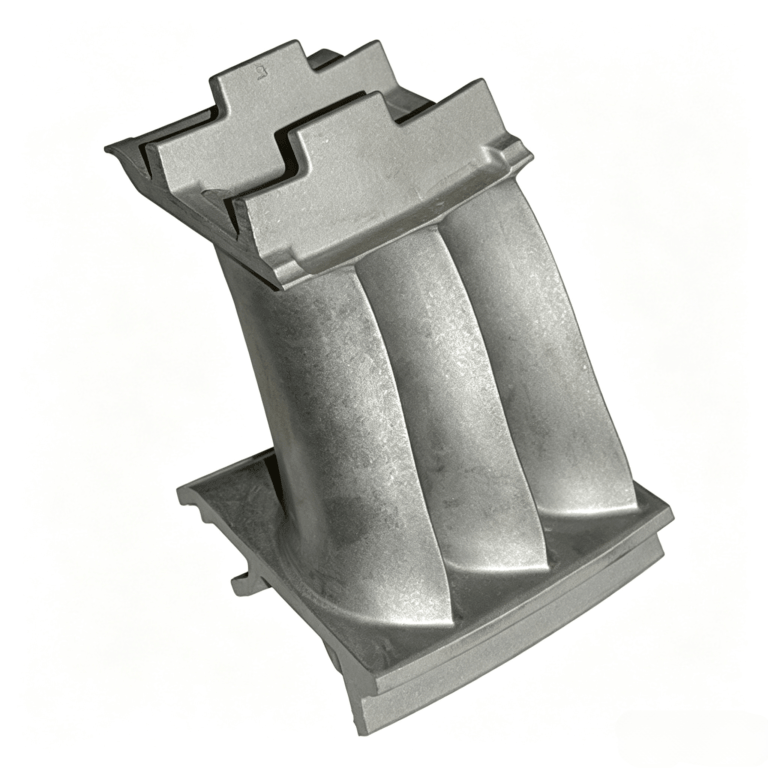
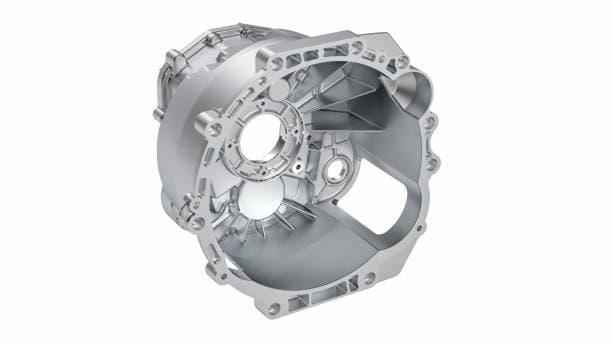
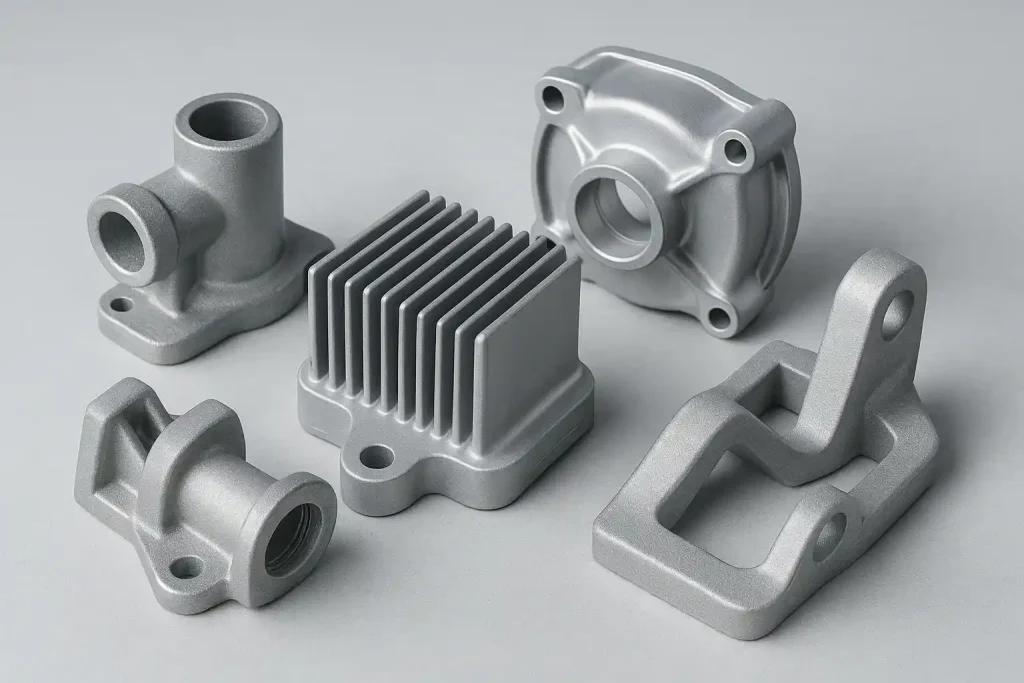
Customized aluminum alloy casting parts including brackets, covers, housings, heat sinks, and machinery components.
I. Product Overview
Aluminum alloy castings are metal components of various shapes produced by pouring molten aluminum or aluminum alloys into molds (die cavities) where they solidify through casting processes. Our product portfolio covers multiple casting routes including die casting, gravity casting, low‑pressure casting, investment casting, sand casting, lost foam casting, etc., enabling the production of complex‑shaped, high‑dimensional‑accuracy, and good‑surface‑finish aluminum alloy parts.
Thanks to the combined advantages of low cost, high productivity, design flexibility, and excellent performance, aluminum alloy castings have become key components in the lightweight transformation of modern manufacturing. They are widely used in automotive, aerospace, rail transit, machinery, electronics/telecommunications, new energy, and many other sectors. In 2024, China’s output of aluminum (and magnesium) alloy castings reached 8.32 million tons, accounting for 16.39% of the nation’s total casting production.
II. Core Advantages
1. Lightweight yet High Strength – Excellent Specific Strength
Aluminum alloys have low density (about one‑third that of steel) and high specific strength. Under the same load‑bearing conditions, aluminum alloy castings can significantly reduce structural weight. Aluminum is about 60% lighter than steel, while offering excellent tensile strength and rigidity, meeting both weight‑reduction and structural‑integrity requirements simultaneously. Replacing steel with aluminum has become a core lightweighting strategy in the automotive, aerospace, and other industries.
2. Good Corrosion Resistance
Aluminum has high chemical stability and resistance to oxidation. Aluminum alloy castings do not rust and offer good corrosion resistance. In particular, Al‑Mg series casting alloys exhibit excellent corrosion resistance, making them suitable for marine environments and other corrosive service conditions.
3. Good Thermal and Electrical Conductivity
Aluminum alloys possess good thermal and electrical conductivity, making them ideal for heat sinks, motor housings, electronic equipment enclosures, and other thermal‑management applications. For example, the thermal conductivity of the commonly used A356 alloy can reach 145 W/(m·K).
4. Excellent Castability
Aluminum alloys have a relatively low melting point (pure aluminum melts at 660.23°C, with pouring temperatures typically between 730 and 750°C), high latent heat of solidification, and good fluidity, facilitating the casting of thin‑walled and complex‑shaped components. Cast aluminum alloys exhibit good flowability, low shrinkage, and low hot‑tearing tendency, enabling the production of intricate parts.
5. High Dimensional Accuracy and Good Surface Finish
With processes such as permanent mold casting and die casting, high dimensional accuracy and good surface smoothness can be achieved. Dimensional tolerances typically reach IT12–IT14 grades.
6. Recyclable and Environmentally Friendly
Aluminum alloys have stable recycling performance, high recovery efficiency, and low recycling costs. Remelting and reuse conserve resources and energy, aligning with green manufacturing and circular economy principles.
III. Casting Processes
Our company offers a range of casting processes to meet diverse product requirements:
1. Low‑Pressure Casting
Process Principle: Compressed air (0.01–0.1 MPa) is introduced into a sealed crucible or holding furnace, forcing the molten aluminum alloy up through a riser tube and smoothly into the mold cavity, where it solidifies under pressure.
Key Advantages:
- Smooth mold filling with good melt fluidity, minimal porosity and inclusions
- Dense microstructure and high mechanical properties
- High metal yield, typically 90–98%
- Clear contours and smooth surface finish
- Mechanical properties superior to those of gravity‑cast parts – strength and elongation can be increased by about 20%
Typical Applications: Mass‑produced aluminum castings such as automotive engine cylinder heads, subframes, wheels, etc.
2. High‑Pressure Die Casting
Process Principle: Molten metal is injected at high pressure (10–200 MPa) and high speed into a steel mold, filling rapidly and solidifying under pressure.
Key Advantages:
- High productivity – multiple parts per minute
- Suitable for complex thin‑walled parts (minimum wall thickness >2 mm)
- Excellent surface finish and dimensional precision
- Minimal machining allowance
Typical Applications: High‑volume thin‑walled complex parts such as housings, brackets, electronic device enclosures, etc.
3. Gravity Casting (Permanent Mold Casting)
Process Principle: Molten aluminum alloy is poured into a permanent metal mold under gravity (earth’s gravity) and solidifies to form the casting.
Key Advantages:
- Rapid heat extraction by the metal mold results in a dense structure and high mechanical properties
- High dimensional accuracy, smooth surface, and consistent quality
- Relatively simple and flexible process, high yield rate, suitable for mass production
- Reusable molds – hundreds to tens of thousands of cycles
- Supports heat treatment for strengthening
Process Parameters:
- Mold preheat temperature: 200–300°C
- Pouring temperature: 680–740°C
- Mold opening / part ejection time: 10–60 seconds after pouring
Typical Applications: Automotive engine blocks, cylinder heads, pistons, intake manifolds; motorcycle wheels; motor housings, etc.
4. Investment Casting
Suitable for small‑to‑medium‑sized parts with complex shapes and high dimensional requirements, enabling near‑net‑shape production.
IV. Commonly Used Material Grades
Depending on the application and performance requirements, the following cast aluminum alloys are available:
| Alloy Grade | Characteristics | Typical Applications |
|---|---|---|
| A356 (AlSi7Mg) | High‑strength structural alloy; tensile strength up to 320 MPa; elongation 8–12% after heat treatment | Automotive structural parts, chassis components, aerospace parts, high‑strength structural members |
| ADC12 (YZAlSi11Cu3) | Good fluidity and pressure tightness, suitable for die casting | Housing parts, cylinder head covers, sensor brackets, cylinder blocks |
| ZL101 (AlSi7Mg) | Good corrosion resistance | Marine environment components, general structural parts |
| ZL104 (AlSi9Mg) | Well‑balanced overall properties | Automotive and machinery parts |
| A380 | Excellent die‑casting properties and corrosion resistance | Die‑cast parts, electronic device housings |
| Al‑Si‑Mg‑Cu series | Medium strength alloys | General structural parts |
| Al‑Cu series | High‑strength alloys | Heavy‑load structural members |
| Al‑Mg series | Corrosion‑resistant alloys | Marine environments, corrosive service conditions |
Note: Most cast aluminum alloys require heat treatment to achieve strengthening, relieve internal stresses, stabilize microstructure, and ensure dimensional stability.
V. Technical Parameters (Reference Values)
Mechanical Properties (Typical Values)
| Material | Condition | Tensile Strength (MPa) | Yield Strength (MPa) | Elongation (%) | Hardness (HB) |
|---|---|---|---|---|---|
| A356 | T6 heat‑treated | ≥320 | ≥225 | 8–12 | – |
| ADC12 | As‑cast (die cast) | ~250 | – | ~3 | ~102 |
| ADC12 | T6 heat‑treated | 320–380 | 280–340 | 5–8 | 110–130 |
Casting Process Parameters
| Parameter | Gravity Casting | Low‑Pressure Casting | High‑Pressure Die Casting |
|---|---|---|---|
| Pouring temperature | 680–740°C | 730–750°C | depends on alloy |
| Mold temperature | 200–300°C | 220–450°C | depends on alloy |
| Filling pressure | gravity (0.1 MPa) | 0.01–0.1 MPa | 10–200 MPa |
| Minimum wall thickness | ≥6 mm | ≥3.5 mm | ≥2 mm |
VI. Application Fields
Automotive Industry
Aluminum alloy castings are most widely used in the automotive sector, accounting for 54–70% of automotive aluminum applications. Major applications include:
- Powertrain: engine cylinder heads, cylinder blocks, intake manifolds, pistons
- Chassis systems: subframes, suspension components, steering knuckles
- Body structures: shock towers, pillars, structural body parts
- New energy vehicle (NEV) three‑electric systems: motor housings, battery pack enclosures, electronic control unit (ECU) housings
- Others: transmission housings, oil pump housings, starter motor housings
Every 100 kg reduction in vehicle weight can reduce fuel consumption by 0.7 L/100 km. Replacing steel with aluminum has become a mainstream trend in the automotive industry.
Aerospace
Thanks to their light weight and high strength, aluminum alloy castings are widely used in aerospace:
- Aircraft structural parts (wing ribs, landing gear components, engine pylons)
- Aero‑engine casings, gas turbine blades
- Large thin‑walled complex cabin bodies, high‑strength/toughness fuselage components
Machinery Manufacturing
- Pump bodies, valve bodies, motor housings
- Gearboxes, drive shafts, pulleys, flanges
- Hydraulic valves, valve casings, connecting pipes
Electrical & Electronics
- Junction boxes, heat sinks, switch housings
- Telecommunication equipment enclosures, electronic device casings
- Lighting product housings
Rail Transit & Marine
- Rail transit structural components
- Marine parts
VII. Surface Treatment & Post‑Processing
We provide comprehensive surface treatment and secondary processing services:
Surface Treatment Options
- Sandblasting / Shot blasting: removes surface oxides, improves roughness and coating adhesion
- Anodizing: forms a dense oxide film, enhancing corrosion resistance, wear resistance, and decorative appearance
- Electrostatic powder coating / fluorocarbon painting: provides long‑lasting color retention
- Spray painting / plastic coating: suitable for decorative protection of die‑cast parts
- Impregnation sealing: addresses leakage issues caused by internal porosity/shrinkage – ideal for parts with sealing requirements
Post‑Processing Capabilities
- Precision machining (turning, milling, drilling, tapping, etc.)
- Dimensional inspection and quality control
- Assembly and packaging
VIII. Customization Services
We offer one‑stop services from mold design, casting, and machining to surface treatment:
- Custom production from drawings: manufacturing non‑standard and special‑shaped parts according to customer blueprints
- Custom production from samples: reverse engineering and production based on customer samples
- OEM / ODM services: support for brand‑specific customization
- Mold design and manufacturing: professional tooling development capabilities
- Small‑batch pilot production: to meet validation needs during product development
- Large‑scale mass production: stable and efficient high‑volume manufacturing
IX. Quality Assurance
- Material control: strict control of alloy composition to ensure performance compliance
- Process control: full‑process parameter monitoring for stable casting quality
- Non‑destructive testing (NDT): X‑ray inspection, ultrasonic testing, penetrant testing, etc.
- Dimensional inspection: CMM (coordinate measuring machine) and other precision measuring equipment
- Performance testing: comprehensive mechanical property, sealing, corrosion resistance tests, etc.
X. Contact Us
We welcome you to submit drawings or samples for custom production inquiries. Our technical team is ready to provide professional aluminum alloy casting solutions tailored to your needs.
Need Custom Alloy Casting Parts?
Send us your drawings, samples, material requirements, quantity and application information. Our team will review your project and provide a suitable manufacturing solution.