Magnesium Alloy Casting
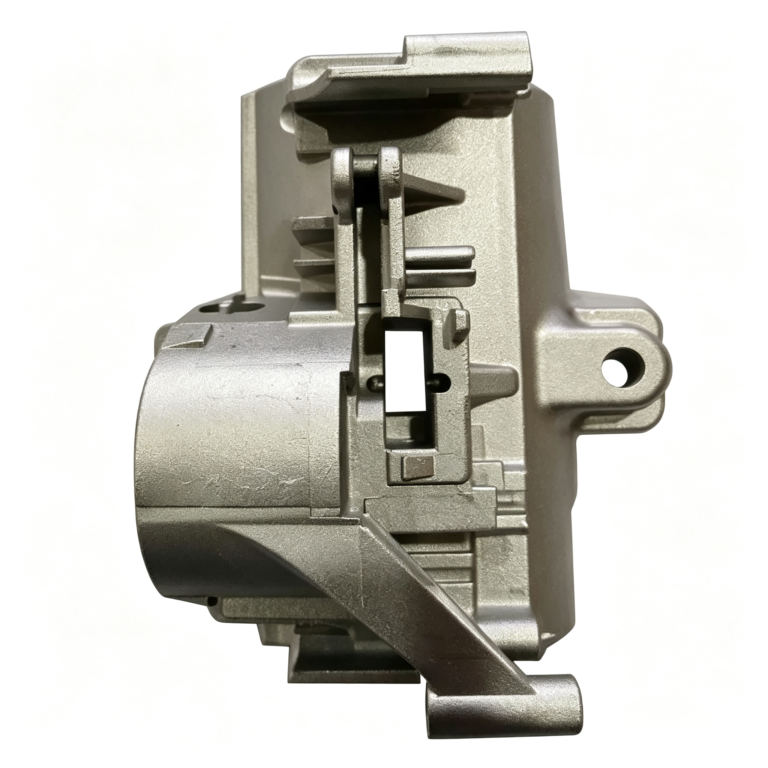
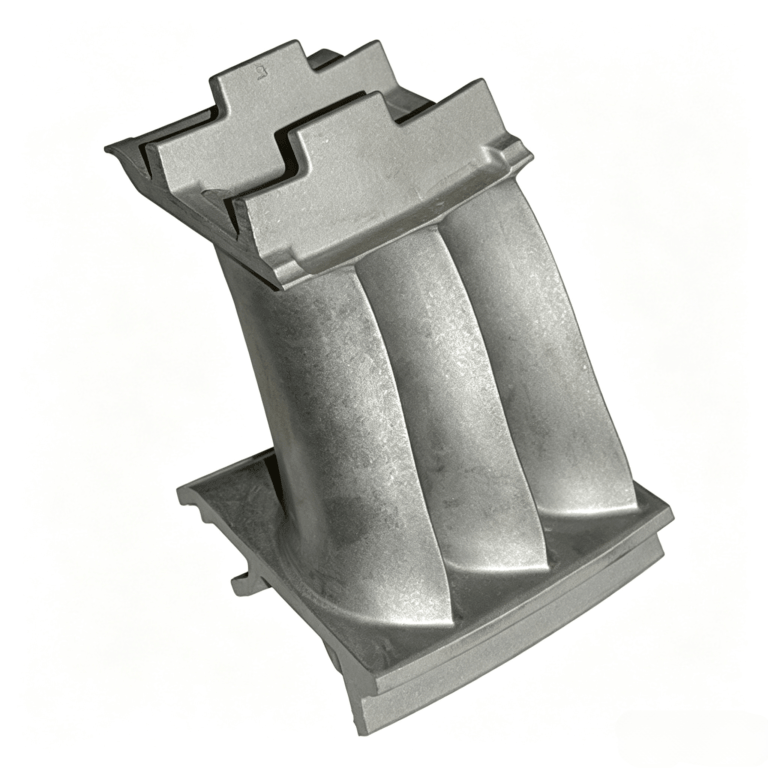
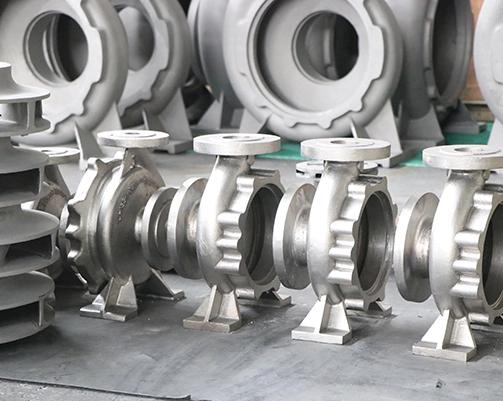
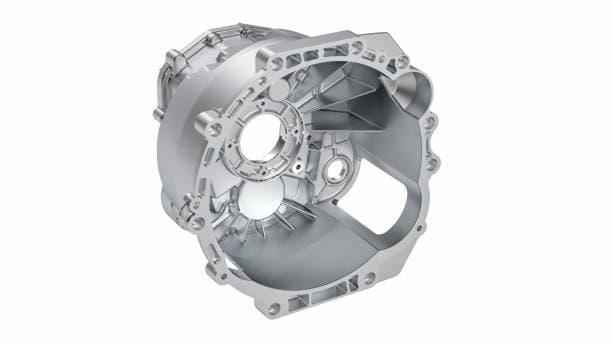
Custom magnesium alloy die casting housings designed for lightweight structures, equipment assemblies, and industrial applications.
1. Product Overview
Magnesium alloys are alloys based on magnesium with the addition of other elements. Known as “the green material of the 21st century,” they are one of the best material solutions for achieving the “dual carbon” strategy. Magnesium alloy castings are components produced by casting methods, and they are classified into cast magnesium alloys and wrought magnesium alloys according to the forming method, with cast magnesium alloys being far more widely used than wrought alloys.
Magnesium alloys are abundant in resources and offer outstanding advantages such as low density, high specific strength and specific stiffness, excellent damping capacity for vibration and noise reduction, electromagnetic shielding capability, and good recyclability. The density of magnesium is approximately 1.8 g/cm³, which is only about 2/3 that of aluminium and 1/4 that of steel. Thanks to their remarkable lightweight properties, magnesium alloy castings are now widely used in automotive manufacturing, aerospace, 3C electronics, national defence, military industries, rail transit, and many other fields.
Our products strictly comply with national standards including GB/T 13820-2018 Magnesium Alloy Castings, GB/T 1177-2018 Cast Magnesium Alloys, and GB/T 25747-2022 Magnesium Alloy Die Castings. The performance and quality of our products meet internationally advanced levels.
2. Product Classification
2.1 By Alloy System
Cast magnesium alloys are mainly divided into the following three major alloy systems:
(1) Mg‑Al System Alloys
Cast magnesium alloys with aluminium and zinc as the main alloying elements. This is currently one of the most cost‑effective and efficient forming magnesium alloy systems. Typical grades include AZ91D, AM60, AM50, AE44, ZM5, ZM10, etc. Mg‑Al system alloys are mainly used for pressure die casting due to their excellent formability and good strength. Among them, AZ91D is the workhorse of the magnesium die‑casting industry, accounting for about 90% of all applications.
(2) Mg‑Zn‑Zr System Alloys
Cast magnesium alloys with zinc and zirconium as the main alloying elements. Typical grades include ZM1 (ZMgZn5Zr), ZM2 (ZMgZn4RE1Zr), and ZM7 (ZMgZn8AgZr). Mg‑Zn system alloys have a wide solidification range and are not suitable for pressure die casting, but they can achieve ideal mechanical properties through squeeze casting combined with aging treatment.
(3) Mg‑RE‑Zr System Alloys (Magnesium‑Rare Earth‑Zirconium)
Cast magnesium alloys with rare earth elements and zirconium as the main alloying elements. Typical grades include ZM3 (ZMgRE3ZnZr), ZM4 (ZMgRE3Zn2Zr), ZM6 (ZMgRE2ZnZr), as well as VW63K, VW83K, VW103K, WE54, WE43, and EA42. Mg‑RE system cast magnesium alloys can be formed not only by pressure die casting but also by sand casting, squeeze casting, and other processes. After T6 treatment, the yield strength can exceed 300 MPa and tensile strength exceed 400 MPa.
2.2 By Casting Process
Magnesium alloys have a wide adaptability to casting processes; almost all casting methods can be used to produce magnesium alloy castings. The main processes include:
- High‑Pressure Die Casting (HPDC) : The most mature and widely used casting technology for magnesium alloys. Magnesium alloys have low melting points and good fluidity, making them suitable for die casting and capable of producing thin‑walled components.
- Sand Casting: Suitable for large, complex‑shaped parts with good casting quality.
- Permanent Mold Casting (Gravity Die Casting) : Suitable for complex, large parts with good quality but higher cost.
- Investment Casting (Lost‑Wax) : High‑precision process for complex, precision castings.
- Low‑Pressure Casting: Suitable for medium‑sized, complex parts with good quality and relatively low cost.
- Squeeze Casting: Significantly reduces casting defects.
- Semi‑Solid Casting: An emerging casting technology.
2.3 By Designation Nomenclature
In the Chinese designation system, magnesium alloy grades consist of two Chinese pinyin letters followed by Arabic numerals: M stands for magnesium alloy, Z for casting, Y for die casting, and B for wrought. For example, ZM1 means No. 1 cast magnesium alloy, and YM5 means No. 5 die‑cast magnesium alloy. Internationally, most magnesium alloy grades follow the ASTM recommended nomenclature: two English letters indicate the main alloying elements (A‑aluminium, E‑rare earth, K‑zirconium, Z‑zinc, etc.), and the two subsequent digits indicate their nominal contents.
3. Typical Product Grades and Technical Parameters
3.1 AZ91D Die‑Cast Magnesium Alloy
AZ91D is the most widely used alloy grade in the magnesium die‑casting industry, accounting for about 90% of all applications. It offers excellent physical properties and outstanding castability, and is widely used in automotive seats, transmission housings, instrument panels, and other components.
| Parameter | Value / Description |
|---|---|
| Material Grade | AZ91D (ASTM B94) |
| Main Chemical Composition | Mg balance, Al 8.5‑9.5%, Zn 0.45‑0.9%, Mn ≥0.17% |
| Density | Approx. 1.81 g/cm³ |
| Tensile Strength | ≥185 MPa |
| Yield Strength | 140‑159 MPa |
| Elongation | 3%‑5% |
| Brinell Hardness | Approx. 70 HB |
| Casting Method | High‑pressure die casting, squeeze casting |
| Service Temperature Range | Room temperature to 120℃ |
Key Features: High Al content gives excellent strength; good fluidity for thin‑walled, complex parts; strength can be further improved by T6 heat treatment.
Typical Applications: Automotive transmission housings, clutch housings, instrument panel beams, seat frames, electric drive housings, flywheel housings, etc.
3.2 AM60B Die‑Cast Magnesium Alloy
AM60B is a die‑cast magnesium alloy with good toughness and ductility, suitable for components subject to impact loads and requiring high safety margins.
| Parameter | Value / Description |
|---|---|
| Material Grade | AM60B (ASTM B94) |
| Main Chemical Composition | Mg balance, Al 5.5‑6.5%, Mn 0.24‑0.6% |
| Density | Approx. 1.78 g/cm³ |
| Tensile Strength | ≥170 MPa |
| Yield Strength | ≥120 MPa |
| Elongation | ≥6% |
| Fracture Toughness | Superior to AZ91D |
| Casting Method | High‑pressure die casting |
| Service Temperature Range | Room temperature to 120℃ |
Key Features: Lower aluminium content provides better ductility and toughness than AZ91D; better fracture toughness; suitable for impact‑bearing components.
Typical Applications: Automotive door inner panels, wheels, seat frames, safety‑related components.
3.3 AM50A Die‑Cast Magnesium Alloy
| Parameter | Value / Description |
|---|---|
| Material Grade | AM50A (ASTM B94) |
| Main Chemical Composition | Mg balance, Al 4.5‑5.3%, Mn 0.28‑0.5% |
| Density | Approx. 1.77 g/cm³ |
| Tensile Strength | ≥160 MPa |
| Yield Strength | ≥110 MPa |
| Elongation | ≥8% |
| Casting Method | High‑pressure die casting |
Key Features: Lowest aluminium content among the three, offering the best ductility; combines good toughness with formability.
Typical Applications: Automotive instrument panel beams, seat frames, steering wheel frames, etc.
3.4 ZM5 Cast Magnesium Alloy (Mg‑Al‑Zn System)
ZM5 is a traditional Chinese cast magnesium alloy grade, representing the Mg‑Al‑Zn system.
| Parameter | Value / Description |
|---|---|
| Material Grade | ZM5 (Chinese grade) |
| Main Chemical Composition | Mg balance, Al 7.5‑9.0%, Zn 0.2‑0.8%, Mn 0.15‑0.5% |
| Density | Approx. 1.81 g/cm³ |
| Tensile Strength | ≥180 MPa |
| Yield Strength | ≥120 MPa |
| Elongation | ≥4% |
| Casting Method | Sand casting, permanent mold casting, die casting |
Key Features: Relatively wide solidification interval but good filling ability; excellent casting process performance.
Typical Applications: General mechanical structural parts, housing components, etc.
3.5 WE43B‑T6 High‑Strength Heat‑Resistant Magnesium Alloy (Mg‑Y‑Nd‑Zr System)
WE43B is a representative high‑strength, heat‑resistant cast magnesium alloy of the Mg‑rare earth system. After T6 heat treatment, it offers excellent mechanical properties at both room and elevated temperatures.
| Parameter | Value / Description |
|---|---|
| Material Grade | WE43B‑T6 (ASTM B80) |
| Main Chemical Composition | Mg balance, Y 3.7‑4.3%, Nd 2.0‑2.5%, Zr ≥0.4% |
| Density | Approx. 1.84 g/cm³ |
| Tensile Strength (room temp.) | ≥330 MPa |
| Tensile Strength (250℃) | ≥280 MPa |
| Yield Strength | ≥200 MPa |
| Elongation | ≥5% |
| Heat Treatment Condition | T6 (solution + artificial aging) |
| Casting Method | Sand casting, investment casting |
Key Features: Rare earth elements (yttrium, neodymium) significantly improve heat resistance and high‑temperature strength; after T6 treatment, yield strength can exceed 300 MPa and tensile strength exceed 400 MPa; suitable for service up to 250℃.
Typical Applications: Aero‑engine components, aerospace structural parts, racing car components, high‑end automotive engine brackets, etc.
3.6 Performance Comparison of Grades
| Grade | Density (g/cm³) | Tensile Strength (MPa) | Yield Strength (MPa) | Elongation (%) | Key Features | Applicable Processes |
|---|---|---|---|---|---|---|
| AZ91D | 1.81 | ≥185 | 140‑159 | 3‑5 | Highest strength, widest use | Die casting |
| AM60B | 1.78 | ≥170 | ≥120 | ≥6 | Good toughness, better fracture toughness | Die casting |
| AM50A | 1.77 | ≥160 | ≥110 | ≥8 | Best ductility | Die casting |
| ZM5 | 1.81 | ≥180 | ≥120 | ≥4 | Excellent castability | Sand/Permanent mold/Die |
| WE43B‑T6 | 1.84 | ≥330 | ≥200 | ≥5 | Heat‑resistant, high‑strength, RE system | Sand/Investment |
4. Detailed Casting Processes
4.1 High‑Pressure Die Casting (HPDC)
Process Principle: Liquid or semi‑liquid metal is injected into a die cavity at high pressure and high speed, and solidifies under pressure to obtain the casting.
Process Features:
- High efficiency, automated, suitable for mass production
- Magnesium alloys have low melting points and good fluidity, ideal for die casting
- Capable of producing thin‑walled parts with low material consumption
- High dimensional accuracy and good surface quality
- Two types: cold‑chamber and hot‑chamber die casting machines; parts under 1 kg use hot‑chamber, parts over 1 kg use cold‑chamber
Applicable Alloys: AZ91D, AM60, AM50, AE44, AS41, etc.
Applications: Automotive components, 3C electronic housings, and other high‑volume precision castings.
4.2 Sand Casting
Process Principle: A sand mold is prepared, molten magnesium alloy is poured into the cavity, and after cooling the casting is removed by cleaning the sand.
Process Features:
- Suitable for large, complex‑shaped parts
- Good casting quality but lower productivity
- Flexible process, ideal for single‑piece or small‑batch production
Applicable Alloys: Almost all cast magnesium alloys, including ZM5, ZM10, WE43, etc.
Applications: Large structural parts, aerospace castings, molds, etc.
4.3 Permanent Mold Casting (Gravity Die Casting)
Process Features:
- Suitable for complex, large parts
- Good quality but higher cost
- Reusable molds, suitable for batch production
Applicable Alloys: ZM5, ZM10, etc.
4.4 Investment Casting (Lost‑Wax)
Process Features:
- High dimensional accuracy and good surface finish
- Enables near‑net shape production
- Suitable for complex, precision small parts
Applicable Alloys: WE43, WE54, and other Mg‑RE system alloys
Applications: Aerospace precision components, medical devices, etc.
4.5 Squeeze Casting
Process Features:
- Significantly reduces casting defects
- Combined with aging treatment, can achieve ideal mechanical properties
- Suitable for Mg‑Zn system alloys (which have a wide solidification range and are not suitable for die casting)
Applicable Alloys: Mg‑Zn system alloys, AZ91D
4.6 Advanced Casting Technologies
- Semi‑Solid Casting: An emerging forming technology that produces fine, uniform microstructures.
- Controlled Pressure Casting: Uses negative pressure for filling and positive pressure for feeding, capable of producing complex thin‑walled castings.
- Vacuum Die Casting: Significantly improves casting density and mechanical properties.
5. Performance Characteristics
5.1 Lightweight Properties
Magnesium alloys are the lightest engineering metallic materials, with densities ranging from 1.74 to 1.85 g/cm³:
- About 2/3 that of aluminium
- About 1/4 that of steel
- Replacing aluminium alloys with magnesium alloys can achieve weight reductions of 15%‑30%
5.2 Mechanical Properties
Different grades of magnesium alloy castings meet various strength requirements:
- Conventional die‑casting alloys (AZ91D): Tensile strength ≥185 MPa, yield strength 140‑159 MPa
- High‑strength heat‑resistant alloys (WE43B‑T6): Tensile strength ≥330 MPa at room temperature, and still ≥280 MPa at 250℃
- Mg‑RE system with T6 treatment: Yield strength can exceed 300 MPa, tensile strength over 400 MPa
5.3 Damping and Vibration Reduction
Magnesium alloys have excellent damping properties. Compared with aluminium alloys, steel, and iron, they have a lower elastic modulus and can absorb more deformation energy under the same loading conditions:
- Greater vibration damping than aluminium alloys and cast iron
- Can withstand high impact and vibration loads
- Ideal for components subject to impact and vibration
- Using them for housings reduces noise; for seats and wheels, reduces vibration
5.4 Electromagnetic Shielding
Magnesium alloys provide good electromagnetic interference (EMI) shielding performance:
- Effectively shield electromagnetic radiation
- Suitable for 5G communication equipment, electronic device housings, and other applications requiring EMI shielding
5.5 Thermal Conductivity and Heat Dissipation
Magnesium alloys have good thermal conductivity:
- Excellent heat dissipation performance
- Suitable for electronic products and automotive components requiring good heat dissipation
5.6 Machinability
Magnesium alloys have excellent machinability:
- Low cutting resistance and high machining efficiency
- Capable of high‑precision machining
5.7 Corrosion Resistance (Note)
Corrosion resistance is a major shortcoming of magnesium alloys, but it can be significantly improved by:
- High‑purity alloying (reducing impurities such as Fe, Cu, Ni)
- Surface treatments (micro‑arc oxidation, chemical conversion coatings, electroplating, painting, etc.)
- Alloy design (adding Mn to improve corrosion resistance)
6. Heat Treatment
The main types of heat treatment for magnesium alloys include annealing, solution treatment, direct artificial aging, and solution treatment plus artificial aging (T6).
6.1 Solution Treatment (T4)
The alloy is heated to the solution temperature range and held for sufficient time to dissolve the solute fully into the solid solution. The solution heating temperature and holding time significantly affect the alloy properties.
- AZ91D: Solution temperature about 420℃, holding time depends on section thickness
- AZ80: Optimum solution temperature 410℃, holding 5 hours
- WE43B: Solution temperature about 525℃
6.2 Artificial Aging (T5/T6)
Aging is performed after solution treatment to precipitate strengthening phases, improving strength and hardness.
- AZ80: Optimum aging temperature 170℃, holding 16 hours, Brinell hardness up to 81.8
- AZ91D: Aging temperature about 250℃, holding 15 hours to achieve maximum hardness and tensile strength
- WE43B: Aging temperature about 200℃, holding 16 hours
6.3 T6 Heat Treatment (Solution + Artificial Aging)
T6 treatment is the most commonly used strengthening heat treatment for magnesium alloys, particularly suitable for Mg‑RE‑Zr system alloys and Mg‑Zn‑Zr system castings.
Effects of T6 Treatment:
- Mg‑RE system cast magnesium alloys after T6 treatment can have yield strength exceeding 300 MPa and tensile strength exceeding 400 MPa
- WE43B‑T6: room‑temperature tensile strength ≥330 MPa, and still ≥280 MPa at 250℃
Equipment Requirements for Heat Treatment:
- Temperature uniformity in the working zone must be maintained within ±6℃
- Each batch of castings should be accompanied by at least one set of tensile test specimens processed in the same furnace
7. Surface Finishing
Magnesium alloy castings must undergo surface treatment to improve corrosion resistance. Commonly used surface treatment technologies include:
7.1 Micro‑Arc Oxidation (MAO)
Micro‑arc oxidation is a process in which the magnesium alloy sample is placed in an electrolyte under a pulsed electric field, and a ceramic film is grown in situ on the metal surface using plasma micro‑arc discharge.
Advantages:
- Significantly increases surface hardness and wear resistance
- Effectively improves corrosion resistance
- Strong adhesion between the film and substrate
Application: After micro‑arc oxidation treatment of AZ91D die‑cast magnesium alloy in a phosphate system, the corrosion resistance is markedly improved.
7.2 Chemical Conversion Coating (Chemical Passivation)
A conversion film is formed on the magnesium alloy surface by chemical treatment:
- Simple operation and low cost
- Provides basic corrosion protection
7.3 Electroless Nickel Plating
Deposition of a nickel layer on the magnesium alloy surface by chemical reduction:
- Uniform coating with controllable thickness
- Significantly improves corrosion and wear resistance
7.4 Electroplating
Electroplating of metal coatings (e.g., zinc, nickel, chromium) on magnesium alloy surfaces.
7.5 Organic Coatings (Painting)
Application of organic paints to magnesium alloy surfaces:
- Available in various colours, combining decorative and protective functions
- Can be used in combination with other surface treatments
7.6 Laser Surface Modification
Using laser to melt, alloy, or clad the surface of magnesium alloys.
8. Quality Assurance and Inspection Standards
8.1 Applicable Standards
Our products strictly comply with the following national and industry standards:
| Standard No. | Title | Status |
|---|---|---|
| GB/T 13820-2018 | Magnesium Alloy Castings | Current |
| GB/T 1177-2018 | Cast Magnesium Alloys | Current |
| GB/T 25747-2022 | Magnesium Alloy Die Castings | Current |
| GB/T 25748-2025 | Die Casting Magnesium Alloys | Current |
| GB/T 26649-2025 | Magnesium Alloy Automotive Wheel Castings | Current |
| GB/T 23600-2009 | X‑ray Real‑time Imaging Inspection Method for Magnesium Alloy Castings | Current |
| GB/T 29092-2012 | Terminology of Defects in Magnesium and Magnesium Alloy Die Castings | Current |
| HB 7780-2005 | Specification for Magnesium Alloy Castings (Aviation) | Current |
| YS/T 626-2023 | Magnesium Alloy Die Castings for Portable Tools | Current |
8.2 Inspection Items
| Inspection Item | Test Method | Standard |
|---|---|---|
| Chemical Composition | Spectrometry, chemical analysis | GB/T 1177, GB/T 25747 |
| Mechanical Properties | Tensile test | GB/T 13820 |
| Internal Defects | X‑ray real‑time imaging | GB/T 23600 |
| Internal Defects | Ultrasonic inspection | HB 7780 |
| Dimensional Accuracy | CMM measurement | GB/T 25747 |
| Surface Quality | Visual inspection | GB/T 13820 |
| Cleanliness | Metallographic examination | GB/T 38786-2020 |
8.3 Defect Control Limits
- Porosity diameter ≤1 mm and spacing ≥3 mm
- Individual shrinkage area ≤3 mm²
- Total defect area ratio should be <2%
- Internal metallurgical quality meets Class I casting requirements of aviation standard HB 7780-2005
8.4 Quality Commitment
- Third‑party inspection reports (SGS/BV optional) are supplied with each shipment
- Each product carries a batch traceability code for quality issue tracing
- 12‑month warranty period; free replacement for non‑human‑induced failures
- Customer‑specific product files are maintained, with service status tracking available
9. Application Fields
9.1 Automotive Industry
Magnesium alloy castings are most widely used in the automotive sector:
Powertrain Components:
- Transmission housings, clutch housings
- Engine cylinder blocks, cylinder head covers
- Electric drive housings, flywheel housings
Body Structures:
- Instrument panel beams, seat frames
- Door inner panels
- Steering wheel frames
Chassis Components:
- Wheels
- Head‑up display brackets
Lightweight Achievements:
- FAW casting & forging AZ91D magnesium alloy flywheel housing, wall thickness 6 mm, weight only 16 kg, 30% lighter than aluminium
- Ultra‑large integrated die‑cast component consolidating 74 parts, weight reduction of 31.5%
- Integrated die‑cast rear seat base replaces 15 steel stampings, weight reduction of 45%
- AITO series models use more than 10 magnesium alloy parts per vehicle, with a total application weight of 20 kg per vehicle
9.2 Aerospace
Magnesium alloys are key materials for achieving equipment lightweighting and improving mobility and energy efficiency:
Components:
- Seat frames, cockpit frames
- Cockpit console brackets
- Reducer housings, intake housings, accessory housings
- Aero‑engine components, propellers, gearboxes, bracket structures
- Rocket, missile, and satellite components
Typical Achievements:
- Successfully developed an ultra‑large complex magnesium alloy vibration platform integral casting for aerospace use, with a diameter of 4.6 m, height 1.2 m, and net weight 11.3 tonnes – the largest reported monolithic magnesium casting globally
- Replacing aluminium with die‑cast magnesium can reduce weight by 15%‑20%
9.3 3C Electronics (Computer, Communication, Consumer Electronics)
Magnesium alloy castings are increasingly used in the 3C sector:
Products:
- Housings for 5G communication equipment
- Laptop shells, tablet frames
- Mobile phone mid‑frames, digital camera bodies
- Energy storage housings
Advantages: Lightweight, good heat dissipation, EMI shielding
9.4 Rail Transit
The urgent need for lightweighting in rail transit drives the adoption of magnesium alloy castings:
- High‑speed train interior parts, seat frames
- Train body structural parts
9.5 Military and Defence
- Military and police explosion‑proof armour
- Lightweight components for military equipment
- Unmanned aerial vehicle structural parts
9.6 General Industry
- High‑speed moving parts in textile, printing, and tobacco machinery
- Power tool housings
- Robot shells
10. Customisation Services
10.1 Dimensional Customisation
- Available in plates, bars, tubes, strips, castings, and other forms
- Single casting weight range: from a few grams to several tonnes (the largest achieved is an 11.3‑tonne integral casting)
- Optional dimensional tolerances to meet different precision requirements
10.2 Material Customisation
- Different alloy grades (AZ, AM, ZM, WE, etc.) can be selected according to service conditions
- Delivery states: as‑cast (F), solution‑treated (T4), artificially aged (T5), or T6, as required
- Custom alloy compositions can be developed for special requirements
10.3 Process Customisation
- Choice of die casting, sand casting, permanent mold, investment, squeeze casting, etc., based on required precision and batch size
- One‑stop service from mold design, process development, to volume delivery
11. Usage Precautions
11.1 Selection Advice
- High strength requirements: Prefer AZ91D or Mg‑RE system alloys
- High toughness requirements: Prefer AM60B or AM50A
- High‑temperature service (≤250℃) : Prefer WE43B or other Mg‑RE heat‑resistant alloys
- Thin‑walled complex parts: Prefer die casting and AZ91D alloy
- Large structural parts: Prefer sand casting or permanent mold casting
11.2 Melting and Casting Precautions
- Magnesium alloys are easily oxidised and flammable; melting and pouring must be carried out under a protective atmosphere (SF₆/CO₂ or SO₂)
- Strictly control melting and pouring temperatures
- Take care to prevent inclusions, shrinkage, and other casting defects
11.3 Machining Guidelines
- Magnesium alloys have good machinability, but cutting temperature control is necessary
- Avoid using water‑based cutting fluids (may cause electrochemical corrosion)
- Surface treatment should be performed promptly after machining
11.4 Surface Protection
- Magnesium alloys have poor corrosion resistance and must be surface‑treated
- Choose micro‑arc oxidation, chemical conversion coating, electroless nickel plating, or painting according to the service environment
- In marine or high‑humidity environments, a combined MAO + painting system is recommended
11.5 Storage and Transport
- Store in a dry, ventilated warehouse, away from humid conditions
- Protect with rust‑proof paper or plastic film
- Avoid contact with acids, alkalis, salts, and other corrosive substances
- Protect against moisture and impact during transport
11.6 Installation and Maintenance
- Avoid direct contact with dissimilar metals (especially copper and steel) to prevent galvanic corrosion
- Periodically inspect the integrity of surface coatings or oxide films
- Repair any coating damage promptly
12. Service and Support
- Technical Assistance: Free service‑condition analysis and alloy selection advice; on‑site guidance available after delivery upon request.
- After‑Sales Tracking: Customer‑specific product files with service status follow‑up visits.
- Emergency Response: 72‑hour emergency channel for major industrial cities.
- Technical Cooperation: Assistance with machining process commissioning, surface treatment solution design, and failure analysis.
- Logistics: Custom wooden box shock‑proof packaging; global sea/air freight supported; transport insurance available.
- R&D Support: Joint development of new magnesium alloy grades and customised casting processes according to customer special requirements.
Need Custom Alloy Casting Parts?
Send us your drawings, samples, material requirements, quantity and application information. Our team will review your project and provide a suitable manufacturing solution.