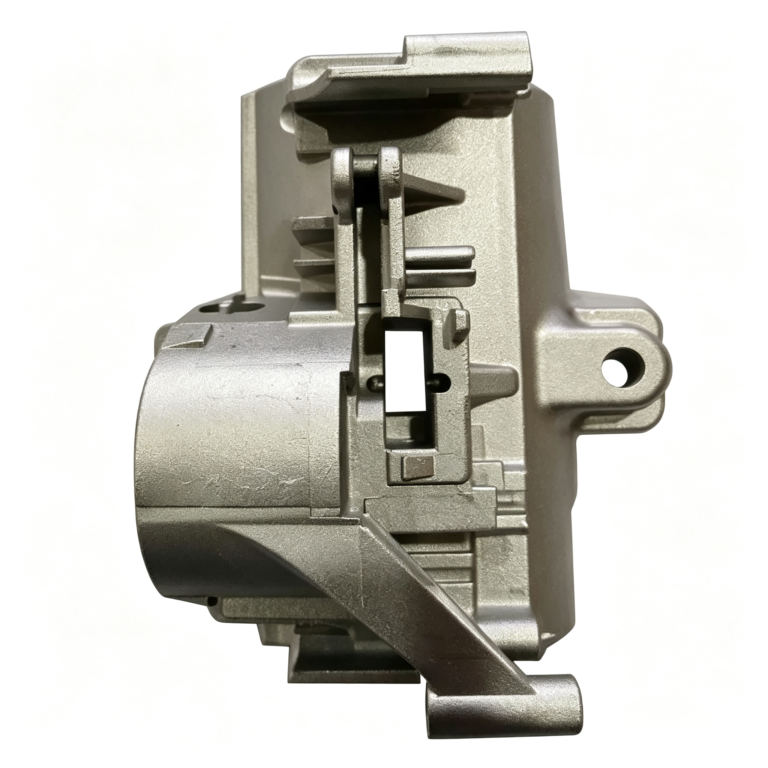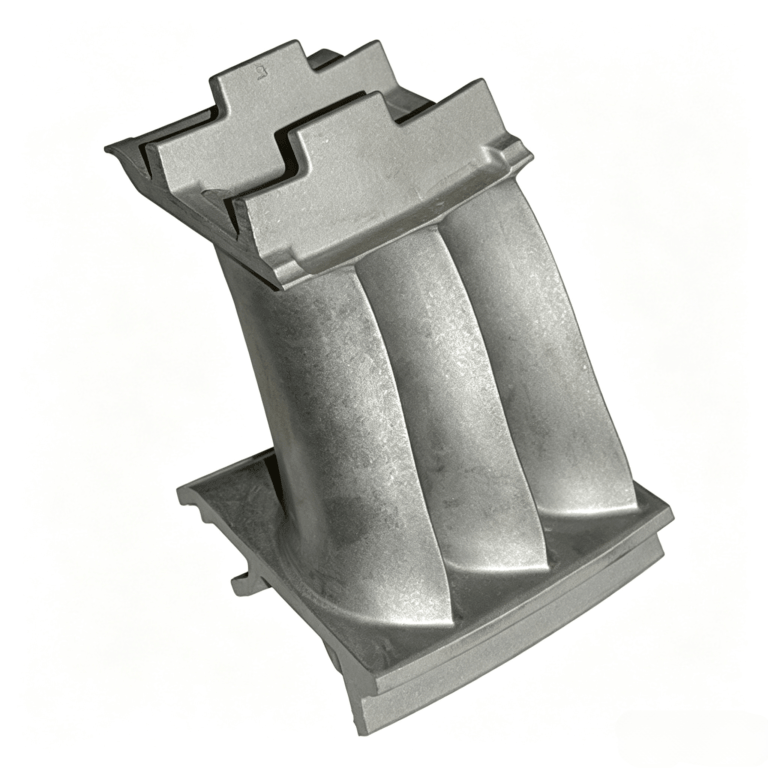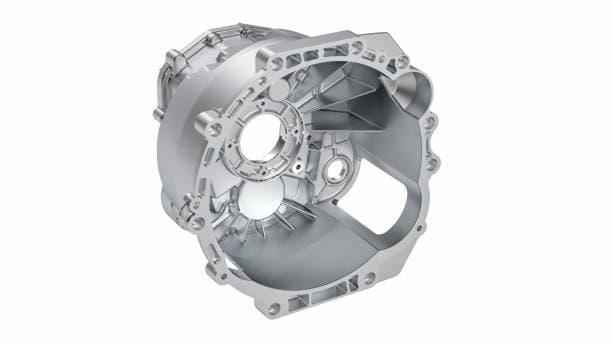
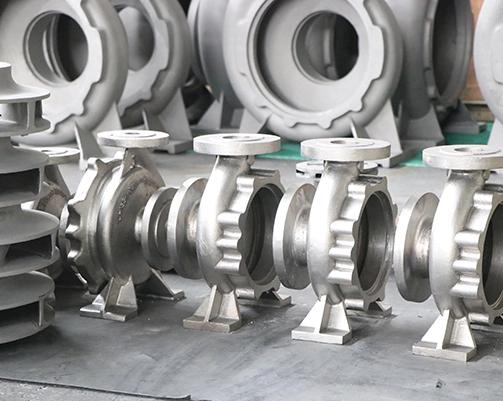
Titanium Alloy Casting
Custom titanium alloy casting components manufactured according to drawings for pump, valve, machinery, and demanding industrial applications.
1. Product Overview
Titanium alloys are alloys based on titanium with the addition of other elements. They are known as “space metals” and “marine metals”. With a density of approximately 4.5 g/cm³ – only about 57% that of steel – titanium alloys offer outstanding advantages including low density, high specific strength, exceptional corrosion resistance, good high‑temperature performance, and excellent biocompatibility. Titanium alloy castings are components produced by casting methods. Thanks to their superior overall performance, they are widely used in high‑end manufacturing fields such as aerospace, shipbuilding, chemical equipment, and medical devices.
Titanium alloys have high melting points and strong reactivity, which impose stringent requirements on melting processes and mold materials during casting production. Our products strictly comply with national standards including GB/T 6614-2014 Titanium and Titanium Alloy Castings and GB/T 15073-2014 Cast Titanium and Titanium Alloys. They are applicable to titanium and titanium alloy castings produced by machined graphite molds, rammed graphite molds, permanent molds, and investment casting. The performance and quality of our products meet internationally advanced levels. The main drafting organisations include Shenyang Research Institute of Foundry, CSSC Luoyang Ship Material Research Institute (No. 725 Research Institute), AVIC Beijing Institute of Aeronautical Materials, and Baoji Titanium Industry Co., Ltd., among other top domestic institutions.
2. Product Classification
2.1 By Alloy Type
Cast titanium alloys are mainly classified into α‑type, β‑type, and α+β‑type according to their microstructure. Their designations consist of “ZT” followed by A, B, or C (denoting α‑type, β‑type, and α+β‑type alloys respectively) and a sequential number.
(1) α‑Type Cast Titanium Alloys (ZTA Series)
α‑type titanium alloys have an α‑phase matrix, offering good thermal stability, weldability, and corrosion resistance, suitable for moderate‑temperature service. Typical grades include ZTA1, ZTA2, ZTA3, ZTA5, ZTA7, ZTA9, ZTA10, ZTA15, and ZTA17. Among them, ZTA15 (Ti‑6Al‑2Zr‑1Mo‑1V) is a representative near‑α titanium alloy, developed from Russian BT20 and BT20Л titanium alloys, and offers good castability, weldability, and comprehensive mechanical properties.
(2) β‑Type Cast Titanium Alloys (ZTB Series)
β‑type titanium alloys have a β‑phase matrix, providing excellent cold workability and high strength levels, suitable for high‑strength applications. A typical grade is ZTB2.
(3) α+β‑Type Cast Titanium Alloys (ZTC Series)
α+β‑type titanium alloys combine the advantages of both α‑type and β‑type alloys, offering excellent comprehensive mechanical properties and are currently the most widely used cast titanium alloy system. Typical grades include ZTC3, ZTC4, ZTC5, and ZTC6. Among them, ZTC4 (Ti‑6Al‑4V) accounts for over 80% of domestic titanium castings and is the most widely used cast titanium alloy.
2.2 By Casting Process
Titanium alloy castings are classified by casting process into the following main categories:
- Investment Casting: Highest precision, suitable for complex precision castings; it is the core manufacturing method for over 98% of components in the aerospace sector.
- Machined Graphite Mold Casting: Graphite molds offer good high‑temperature stability, strong deformation resistance, and high dimensional accuracy.
- Rammed Graphite Mold Casting: Suitable for large castings.
- Permanent Mold Casting: Suitable for batch production.
- Sand Casting: Flexible process, suitable for large structural parts.
3. Typical Product Grades and Technical Parameters
3.1 ZTC4 Cast Titanium Alloy (Ti‑6Al‑4V)
ZTC4 is the most widely used cast titanium alloy, accounting for over 80% of domestic titanium castings. It has the best casting process performance, stable microstructure and properties, and offers good strength and fracture toughness up to 350℃.
| Parameter | Value / Description |
|---|---|
| Material Grade | ZTC4 (Ti‑6Al‑4V) |
| Alloy Type | α+β cast titanium alloy |
| Main Chemical Composition | Al 5.50‑6.75%, V 3.5‑4.5%, Fe ≤0.30%, O ≤0.20% |
| Density | Approx. 4.43 g/cm³ (about 56% of steel) |
| Tensile Strength | ≥895 MPa |
| Yield Strength | ≥830 MPa |
| Elongation | ≥6% |
| Service Temperature Range | Room temperature to 350℃ |
| Casting Method | Vacuum arc melting + graphite mold / investment casting |
| Heat Treatment Condition | As‑cast, annealed, hot isostatic pressed (HIP), solution‑aged, etc. |
Key Features:
- Low density and high specific strength – density only 56% of steel.
- Excellent corrosion resistance and biocompatibility.
- Good casting process performance and stable microstructure/properties.
- After HIP treatment, the microstructure is densified and mechanical properties approach those of wrought products.
Typical Applications: Aero‑engine casings, guide vanes, and other non‑rotating components; widely used in aviation, aerospace, and marine sectors.
3.2 ZTA15 Cast Titanium Alloy (Ti‑6Al‑2Zr‑1Mo‑1V)
ZTA15 is a near‑α titanium alloy with good castability, weldability, and comprehensive mechanical properties. Together with ZTC4, they account for 80% of China’s titanium alloy castings.
| Parameter | Value / Description |
|---|---|
| Material Grade | ZTA15 (Ti‑6Al‑2Zr‑1Mo‑1V) |
| Alloy Type | Near‑α cast titanium alloy |
| Main Chemical Composition | Al ~6.5%, Zr ~2%, Mo ~1%, V ~1% |
| Density | Approx. 4.45 g/cm³ |
| Tensile Strength (as‑cast) | ≥800 MPa |
| Tensile Strength (HIP + annealed) | ≥900 MPa |
| Yield Strength (HIP + annealed) | ≥685 MPa |
| Elongation (HIP + annealed) | ≥10% |
| Service Temperature Range | Room temperature to 400℃ |
| Casting Method | Investment casting, graphite mold casting |
Key Features:
- Good castability, weldability, and comprehensive mechanical properties.
- After HIP and heat treatment, properties are close to wrought products.
- Commonly used for aircraft and aero‑engine structural parts.
Typical Applications: Large structural parts in aerospace and defence fields; aircraft fuselage structural parts; critical engine components.
3.3 Cast Commercially Pure Titanium (ZTA1 / ZTA2 / ZTA3)
Commercially pure titanium castings offer excellent corrosion resistance and are important materials for chemical, marine, and other industries.
| Parameter | ZTA1 | ZTA2 | ZTA3 |
|---|---|---|---|
| Alloy Type | α‑type | α‑type | α‑type |
| Tensile Strength | ≥240 MPa | ≥345 MPa | ≥420 MPa |
| Yield Strength | ≥170 MPa | ≥275 MPa | ≥380 MPa |
| Elongation | ≥24% | ≥20% | ≥15% |
| Key Features | Best corrosion resistance, best ductility | Good overall performance | Highest strength |
| Typical Applications | Chemical corrosion‑resistant parts | General structural parts | High‑strength corrosion‑resistant parts |
3.4 Performance Comparison of Grades
| Grade | Alloy Type | Density (g/cm³) | Tensile Strength (MPa) | Elongation (%) | Key Features | Service Temperature |
|---|---|---|---|---|---|---|
| ZTA1 | α‑type | 4.51 | ≥240 | ≥24 | Best corrosion resistance | RT~300℃ |
| ZTA2 | α‑type | 4.51 | ≥345 | ≥20 | Good overall performance | RT~300℃ |
| ZTA3 | α‑type | 4.51 | ≥420 | ≥15 | High strength | RT~300℃ |
| ZTA15 | Near‑α | 4.45 | ≥800 | ≥10 | Good weldability, good mechanical properties | RT~400℃ |
| ZTC4 | α+β | 4.43 | ≥895 | ≥6 | Widest use, high specific strength | RT~350℃ |
4. Detailed Casting Processes
Titanium alloy casting has stringent requirements for melting processes and mold materials. The main casting processes currently used include investment casting, graphite mold casting, sand casting, rapid casting, and counter‑gravity casting.
4.1 Investment Casting
Process Principle: A wax pattern is used to make an investment mold. Multiple layers of refractory material are applied to form a shell. After dewaxing, the shell is fired, and titanium alloy is melted in a vacuum arc melting furnace and poured into the shell.
Process Features:
- High dimensional accuracy, up to CT6‑CT7.
- Low surface roughness, Ra <1.6 μm.
- Enables near‑net shape with high material utilisation.
- The core manufacturing method for over 98% of components in the aerospace sector.
- China has achieved production capability for castings up to 1300 mm in diameter and 400 kg in weight.
Applicable Alloys: Almost all cast titanium alloys, including ZTC4, ZTA15, ZTA7, etc.
Applications: Aerospace precision castings, medical devices, golf club heads, etc.
4.2 Graphite Mold Casting
Process Principle: High‑purity graphite material is machined or rammed to form the mold, utilising the high‑temperature stability of graphite for titanium alloy pouring.
Process Features:
- Graphite molds have good high‑temperature stability and strong deformation resistance.
- High dimensional accuracy and short mold‑making cycle.
- Molds and cores can be produced by assembly.
- Especially suitable for large‑size titanium alloy castings.
- Two types: machined graphite and rammed graphite.
Applicable Alloys: ZTC4, ZTA15, etc.
Applications: Large structural parts, aerospace components.
4.3 Sand Casting
Process Principle: Special sand is used to make molds, molten titanium alloy is poured into the cavity, and after cooling the casting is cleaned.
Process Features:
- Flexible process, suitable for single‑piece or small‑batch production.
- Suitable for large, complex structural parts.
- Relatively low cost.
Applicable Alloys: Various cast titanium alloys.
Applications: Large structural parts, marine components.
4.4 Advanced Casting Technologies
- Counter‑Gravity Casting: Uses negative pressure for filling, capable of producing complex thin‑walled castings.
- Rapid Casting: Combines 3D printing technology for rapid mold production.
- Centrifugal Casting: Suitable for rotational parts.
- Full‑Process Computer Simulation: Enables precise control of shape and properties.
- Hot Isostatic Pressing (HIP) : Eliminates internal defects and densifies the microstructure.
5. Performance Characteristics
5.1 Lightweight Properties
Titanium alloys are among the lightest high‑strength structural metallic materials:
- Density approximately 4.43‑4.51 g/cm³.
- About 56% of steel.
- Specific strength (strength/density) far superior to steel and aluminium alloys.
5.2 Mechanical Properties
Different grades meet various strength requirements:
- Commercially pure titanium (ZTA1‑ZTA3): tensile strength 240‑420 MPa, excellent ductility.
- ZTA15 (near‑α): tensile strength ≥800 MPa, elongation ≥10%.
- ZTC4 (α+β): tensile strength ≥895 MPa.
- After HIP treatment, mechanical properties approach those of wrought products.
5.3 Corrosion Resistance
Titanium alloys offer excellent corrosion resistance:
- Exceptional resistance to seawater and salt spray – an outstanding marine engineering material.
- Good resistance to most organic acids and alkaline solutions.
- Excellent resistance in oxidising and neutral media.
- Excellent resistance to crevice corrosion and pitting.
5.4 High‑Temperature Performance
Different grades cover different temperature ranges:
- ZTC4: Suitable up to 300‑400℃.
- ZTA15: Suitable from room temperature to 400℃.
- New cast high‑temperature titanium alloys: Can be used up to 650‑750℃.
5.5 Biocompatibility
Titanium alloys have excellent biocompatibility:
- Non‑toxic, no adverse reactions with human tissues.
- Elastic modulus close to human bone.
- Widely used in medical devices and human implants.
5.6 Damping Capacity
Titanium alloys have good damping properties, effectively absorbing vibration energy, making them suitable for components subject to alternating loads and vibration.
6. Heat Treatment
Heat treatment of titanium alloy castings mainly includes annealing, solution treatment, aging, and hot isostatic pressing.
6.1 Annealing
Annealing is the most basic heat treatment for titanium alloy castings, aimed at eliminating casting stresses and improving microstructure.
Process Parameters (for ZTA15 as an example):
- Annealing temperature: 700±14℃.
- Holding time: 2.0±0.1 h.
- Vacuum level: ≤0.133 Pa.
- Cooling method: furnace cool to ≤200℃, release vacuum, cool to ≤40℃ for removal.
Effect: Annealing effectively reduces thermal stresses on the casting surface; the residual stress level after annealing is related to the furnace‑cooling outlet temperature.
6.2 Hot Isostatic Pressing (HIP)
HIP is one of the most critical post‑treatment processes for titanium alloy castings, effectively eliminating internal porosity, shrinkage cavities, and other defects.
Process Parameters (for ZTA15 as an example):
- Holding temperature: 910‑930℃.
- Argon pressure: 130‑140 MPa.
- Holding time: 2.4‑2.5 h.
- Cool to below 300℃ before removal.
Effect:
- Densification of the casting microstructure.
- Mechanical properties approach wrought levels.
- Residual stress on the casting surface after HIP is at a relatively low level.
6.3 Solution Treatment + Aging (Solution Aging)
Applicable to α+β and β‑type titanium alloys for strengthening:
- Solution treatment produces metastable phases.
- Aging precipitates strengthening phases.
- Significantly improves strength and hardness.
6.4 Equipment Requirements for Heat Treatment
- Vacuum heat treatment furnaces are recommended.
- Temperature uniformity in the working zone must be strictly controlled.
- Protective coatings can be applied to the casting surface for atmospheric heat treatment.
7. Surface Finishing
Titanium alloy castings require surface treatment to remove contaminated layers, improve surface quality, and enhance performance.
7.1 Chemical Pickling
Due to the complex shapes of titanium alloy castings, mechanical methods cannot remove the α‑contaminated layer in internal cavities and corners; chemical pickling is usually employed.
Process Features:
- Uniform removal of surface contamination layers.
- Can treat complex internal cavities and corners.
- Thorough cleaning and drying are required after pickling.
Pickling Solution Composition: Hydrofluoric acid + nitric acid + water (HF + HNO₃ + H₂O).
7.2 Sand Blasting / Shot Peening
Process Features:
- Removes surface oxide scale and contamination layers.
- Improves surface finish.
- Note: sand blasting and shot peening can easily clog crack defects.
7.3 Surface Coating Protection
During thermal creep correction, applying a refractory coating on the surface of titanium alloy castings can isolate them from direct contact with graphite tooling, effectively reducing surface contamination and carburisation layers.
7.4 Surface Preparation for Fluorescent Penetrant Inspection
Different surface conditions (blasted, ground, pickled, vacuum heat‑treated, shot‑peened, etc.) have a significant effect on fluorescent penetrant inspection results for surface defects in titanium alloy castings.
8. Quality Assurance and Inspection Standards
8.1 Applicable Standards
Our products strictly comply with the following national standards:
| Standard No. | Title | Status |
|---|---|---|
| GB/T 6614-2014 | Titanium and Titanium Alloy Castings | Current |
| GB/T 15073-2014 | Cast Titanium and Titanium Alloys | Current |
| GB/T 6611-2008 | Terminology and Metallographic Atlas for Titanium and Titanium Alloys | Current |
| GB/T 228.1-2010 | Metallic Materials – Tensile Testing at Room Temperature | Current |
| GB/T 5168-2020 | Test Methods for Microstructure and Macrostructure of Titanium and Titanium Alloys | Current |
| GB/T 8170 | Rules for Rounding off of Numerical Values and Expression of Limit Values | Current |
| GB/T 20967 | Non‑destructive Testing – Visual Testing – General Principles | Current |
Scope: Applicable to titanium and titanium alloy castings produced by machined graphite, rammed graphite, permanent mold, and investment casting processes. This standard is the fundamental standard covering China’s titanium and titanium alloy casting products.
8.2 Inspection Items
| Inspection Item | Test Method | Standard |
|---|---|---|
| Chemical Composition | Spectrometry, chemical analysis | GB/T 15073 |
| Room‑Temperature Mechanical Properties | Tensile test | GB/T 228.1 |
| Microstructure / Macrostructure | Metallographic examination | GB/T 5168, GB/T 6611 |
| Internal Defects | X‑ray inspection (radiography) | GB/T 6614 |
| Internal Defects (heavy castings) | Radiography or ultrasonic testing | GB/T 6614 |
| Surface Quality | Visual inspection | GB/T 20967 |
| Dimensional Accuracy | CMM measurement | GB/T 6614 |
| Non‑destructive Testing | Fluorescent penetrant inspection (PT) | GB/T 6614 |
8.3 Quality Assurance Measures
- Master Alloy Control: Strict control over melting methods and quality of master alloy ingots.
- Casting Process Control: Vacuum arc melting furnace used, with strict control of vacuum level, current, voltage, and other parameters.
- Hot Isostatic Pressing: Eliminates internal porosity, shrinkage cavities, and other defects.
- Weld Repair Control: Repair welding personnel must have appropriate qualifications.
- Batch Traceability: Each batch is supplied with a complete quality certificate.
8.4 Quality Commitment
- Third‑party inspection reports are supplied with each shipment.
- Each product carries a batch traceability code for quality issue tracing.
- 12‑month warranty period; free replacement for non‑human‑induced failures.
- Customer‑specific product files are maintained, with service status tracking available.
9. Application Fields
Titanium and titanium alloy castings are mainly used in aviation, aerospace, marine, chemical, and other important equipment manufacturing sectors.
9.1 Aerospace
Titanium alloy castings are most widely and critically used in the aerospace sector:
Aero‑Engine Components:
- Engine casings
- Guide vanes
- Compressor discs, turbine discs
- Intake casings, accessory casings
Aircraft Structural Parts:
- Support beams
- Fuselage frames
- Landing gear components
Spacecraft Components:
- Spacecraft cabin frames
- Rocket engine shells
- Liquid‑fuel engine combustion chambers
Typical Achievements:
- China has achieved production capability for castings up to 1300 mm in diameter and 400 kg in weight.
- Breakthroughs in integral precision casting technology for large, complex castings.
- Shenyang Research Institute of Foundry overcame ultra‑low‑temperature casting material challenges and developed rocket‑engine titanium alloy components that maintain performance at ‑253℃.
9.2 Marine and Offshore Engineering
Titanium alloys offer excellent seawater corrosion resistance, making them ideal marine engineering materials:
- Ship propulsion system components.
- Seawater piping systems.
- Naval vessel structural parts.
- Deep‑sea equipment components.
Industry Standing: The 725 Research Institute of CSSC is a leading domestic and international production base for titanium alloy castings and products, capable of producing castings up to 2 m in diameter, about 1.5 m in height, and weighing up to 800 kg, as well as precision castings with wall thicknesses down to 1 mm (locally 0.8 mm), with an annual production capacity of 1000 tonnes.
9.3 Chemical and Petrochemical Industry
Titanium alloys have excellent corrosion resistance against a wide range of corrosive media:
- Titanium alloy centrifugal pumps, valves, fans.
- Heat exchangers, reactors.
- Piping systems, flanges.
- Petrochemical corrosion‑resistant equipment.
9.4 Medical Devices
Titanium alloys have good biocompatibility:
- Artificial limb components.
- Orthopaedic implants.
- Dental implants.
- Surgical instruments.
9.5 Other Fields
- Sports & Leisure: Golf club heads.
- Automotive: High‑performance automotive components.
- Power & Nuclear: Corrosion‑ and heat‑resistant components.
10. Customisation Services
10.1 Dimensional Customisation
- Single casting weight range: from a few grams to 800 kg.
- Maximum dimensions: up to 2 m in diameter and 1.5 m in height.
- Minimum wall thickness: down to 1 mm, locally 0.8 mm.
- Dimensional accuracy: up to CT6‑CT7.
- Surface roughness: Ra <1.6 μm.
10.2 Material Customisation
- Different alloy grades (ZTA series, ZTC series, ZTB series, etc.) can be selected according to service conditions.
- Delivery states: as‑cast, annealed, HIP, solution‑aged, etc.
- Custom alloy compositions can be developed for special requirements.
10.3 Process Customisation
- Choice of investment casting, graphite mold casting, sand casting, permanent mold casting, etc., based on required precision and batch size.
- One‑stop service from mold design, process development, casting production, to post‑treatment.
- Full‑process computer simulation capability for casting.
11. Usage Precautions
11.1 Selection Advice
- High corrosion resistance: Prefer ZTA1 or ZTA2 commercially pure titanium.
- High strength: Prefer ZTC4 (α+β type).
- High toughness + weldability: Prefer ZTA15 (near‑α).
- High‑temperature service (300‑400℃) : Prefer ZTC4 or ZTA15.
- Ultra‑high temperature (650‑750℃) : Consider new cast high‑temperature titanium alloys.
11.2 Melting and Casting Precautions
- Titanium alloys are highly reactive; melting and pouring must be conducted under vacuum or inert gas protection.
- Use a vacuum arc melting furnace with strict vacuum control.
- Mold materials must have low reactivity with titanium (e.g., graphite, yttria).
- Strictly control pouring temperature and speed.
11.3 Machining Guidelines
- Titanium alloys have machinability similar to austenitic stainless steel; use carbide tools.
- Cutting speeds should not be too high; adequate cooling and lubrication are required.
- Avoid chlorine‑containing cutting fluids (may cause stress corrosion).
- Surface treatment should be performed promptly after machining.
11.4 Weld Repair
- Casting defects can be repaired by welding using matching filler wire of the same grade.
- Weld repair personnel must have appropriate qualifications.
- Post‑weld annealing is required to relieve welding stresses.
- Non‑destructive testing after repair is required to confirm complete defect removal.
11.5 Storage and Transport
- Store in a dry, clean warehouse.
- Avoid direct contact with dissimilar metals such as iron and copper (to prevent contact corrosion).
- Protect with rust‑proof paper or plastic film.
- Protect against moisture and impact during transport.
11.6 Installation and Maintenance
- Avoid direct contact with dissimilar metals during installation to prevent galvanic corrosion.
- Regularly inspect surface condition; repair any damage promptly.
- Surface quality directly affects fatigue strength; if surface quality does not meet control requirements, fatigue strength will decrease significantly.
12. Service and Support
- Technical Assistance: Free service‑condition analysis, alloy selection advice, and casting process scheme design.
- R&D Support: Joint development of new titanium alloy grades and customised casting processes according to customer special requirements.
- After‑Sales Tracking: Customer‑specific product files with service status follow‑up visits.
- Emergency Response: 72‑hour emergency channel for major industrial cities.
- Technical Cooperation: Assistance with machining process commissioning, surface treatment solution design, and failure analysis.
- Logistics: Custom wooden box shock‑proof packaging; global sea/air freight supported; transport insurance available.
Need Custom Alloy Casting Parts?
Send us your drawings, samples, material requirements, quantity and application information. Our team will review your project and provide a suitable manufacturing solution.