Nickel Alloy Castings
1. Product Overview Nickel alloys are alloys based on nickel with the addition of other elements, and are indispensable key materials in high‑end equipment manufacturing. Nickel alloy castings are components produced by…
1. Product Overview
Nickel alloys are alloys based on nickel with the addition of other elements, and are indispensable key materials in high‑end equipment manufacturing. Nickel alloy castings are components produced by casting methods. With outstanding advantages such as excellent high‑temperature strength, superior corrosion resistance, and good oxidation and hot‑corrosion resistance, they are widely used in aerospace, energy and power, petrochemical, marine engineering, nuclear industry, and other high‑end manufacturing fields that demand extremely stringent material performance.
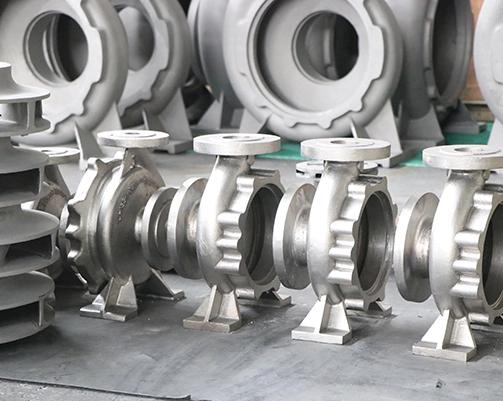
Nickel alloy castings are mainly produced in the form of pressure‑bearing parts such as valves and pumps. Investment castings can weigh up to 500 kg per piece, while sand castings can reach up to 5000 kg per piece. Our products strictly comply with national standards including GB/T 36518-2018 Nickel and Nickel Alloy Castings, GB/T 45167-2024 Visual Inspection Method for Surface Quality of Investment Cast Steel, Nickel Alloy and Cobalt Alloy Castings, and GB/T 35740-2017 Technical Conditions for Nickel and Nickel‑Base Alloy Castings for Industrial Valves. The performance and quality of our products meet internationally advanced levels. The main drafting organisations include Baoji Titanium Industry Co., Ltd., Shenyang Research Institute of Foundry Co., Ltd., and Chinalco Shenyang Nonferrous Metals Processing Co., Ltd., among other top domestic institutions.
2. Product Classification
2.1 By Alloy Type
Nickel alloy castings are mainly divided into the following major alloy systems:
(1) Nickel‑Chromium (Ni‑Cr) System Alloys
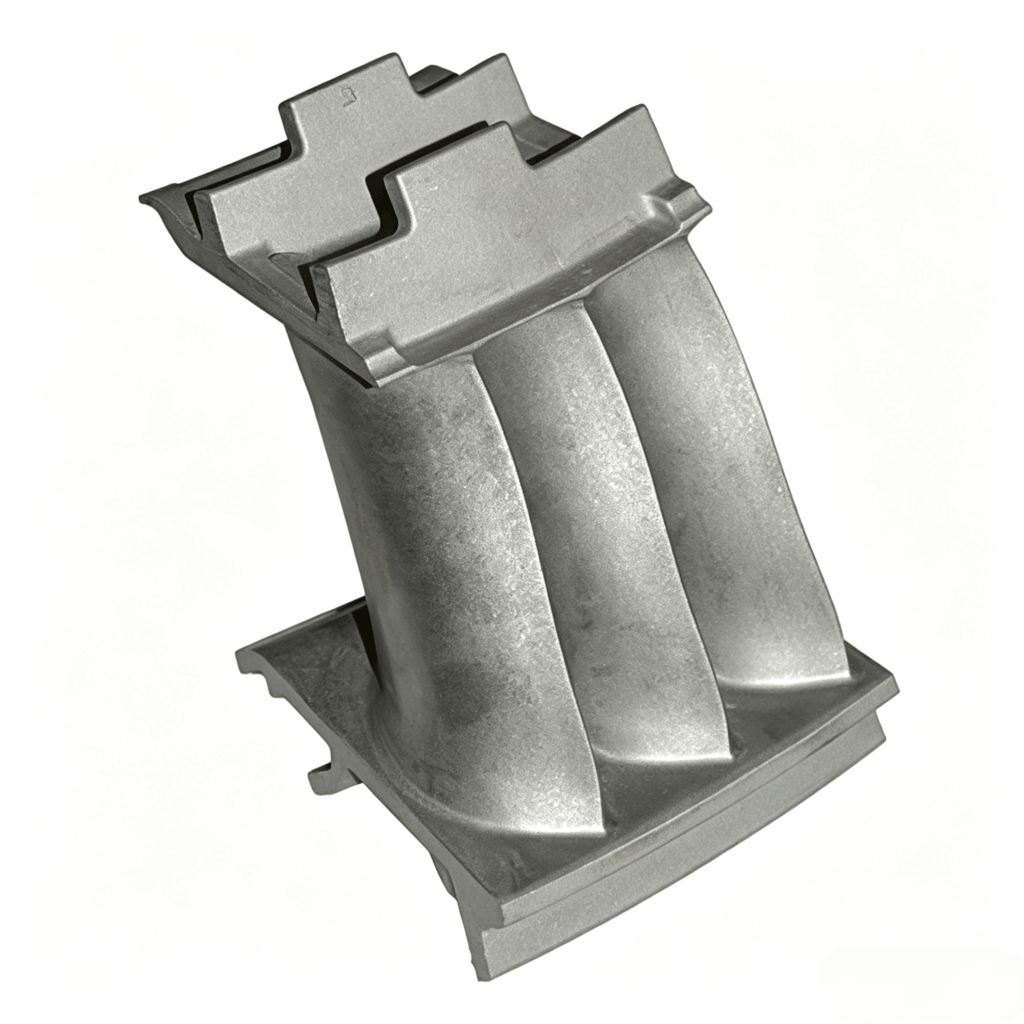
Alloys based on nickel with chromium as the main alloying element, offering good high‑temperature strength and oxidation resistance. Typical grades include K406, K418 (Inconel 713C), K4537, K477, and K4951. These alloys are widely used in aero‑engine hot‑section components, gas turbine blades, and other high‑temperature applications.
(2) Nickel‑Chromium‑Iron (Ni‑Cr‑Fe) System Alloys
Alloys based on Ni‑Cr with the addition of iron, combining good corrosion resistance with moderate cost. A typical grade is Inconel 600 (CY40).
(3) Nickel‑Chromium‑Molybdenum (Ni‑Cr‑Mo) System Alloys
Alloys based on Ni‑Cr with the addition of molybdenum, offering excellent corrosion resistance and pitting resistance. Typical grades include Hastelloy C‑276 (CW12MW) and C‑22 (CX2MW).
(4) Nickel‑Molybdenum (Ni‑Mo) System Alloys
Alloys based on nickel with molybdenum as the main alloying element, providing excellent corrosion resistance against reducing media such as hydrochloric acid and sulfuric acid.
(5) Nickel‑Copper (Ni‑Cu) System Alloys
Alloys based on nickel with copper as the main alloying element, typically represented by Monel alloys, offering excellent resistance to seawater, salt spray, etc.
(6) Nickel‑Chromium‑Cobalt (Ni‑Cr‑Co) System Alloys
Alloys based on Ni‑Cr with the addition of cobalt, offering excellent high‑temperature strength and hot‑corrosion resistance. A typical grade is Haynes 188.
2.2 By Strengthening Mechanism
(1) Solid‑Solution Strengthened Nickel‑Base Alloys
Chromium, molybdenum, tungsten, and other elements are added to form solid solutions, improving strength and corrosion resistance. Typical grades include K406 and K4537. These alloys have good ductility and workability.
(2) Precipitation‑Strengthened (γ‘ Phase‑Strengthened) Nickel‑Base Alloys
Aluminium, titanium, and other elements are added to form γ‘ phase (Ni₃(Al, Ti)) precipitates, significantly improving high‑temperature strength. Typical grades include K418 (Inconel 713C), K477, K4951, and Inconel 738. These alloys have extremely high high‑temperature strength but are generally not forgeable and can only be formed by precision casting.
2.3 By Casting Process
Nickel alloy castings are classified by casting process into the following main categories:
- Investment Casting: Highest precision, suitable for complex precision castings; it is the core manufacturing method for nickel‑base superalloy precision castings for aero‑engines and gas turbines.
- Sand Casting: Flexible process, suitable for large structural parts and pressure‑bearing parts; sand castings can weigh up to 5000 kg.
- Centrifugal Casting: Suitable for rotational parts such as tubes and rings.
- Directional Solidification Casting: By controlling the solidification direction, columnar‑grain or single‑crystal microstructures are obtained, significantly improving thermal‑fatigue and creep resistance.
- Single‑Crystal Casting: Eliminates grain boundaries to achieve ultimate high‑temperature performance and creep resistance.
3. Typical Product Grades and Technical Parameters
3.1 K418 Nickel‑Base Cast Superalloy (Inconel 713C)
K418 is a domestic cobalt‑free, equiaxed, γ‘ phase‑strengthened nickel‑base cast superalloy, equivalent to ASTM Inconel 713C, designed for high‑temperature service up to 900℃. It was developed by INCO in the 1960s and is a classic benchmark in the field of cast superalloys.
| Parameter | Value / Description |
|---|---|
| Material Grade | K418 (Inconel 713C) |
| Alloy Type | γ‘ precipitation‑strengthened cast superalloy |
| Density | 7.9‑8.1 g/cm³ |
| Melting Range | 1260‑1345℃ |
| Tensile Strength (RT) | 900‑1050 MPa |
| Yield Strength (RT) | 700‑800 MPa |
| Elongation (RT) | 2%‑5% |
| Tensile Strength (800℃) | 600‑700 MPa |
| Stress‑Rupture Life (870℃/150MPa) | >100 h |
| Main Chemical Composition | Ni balance (~72‑76%), Cr 12.0‑14.0%, Al 5.5‑6.5%, Mo 3.8‑5.0%, Nb 1.8‑2.5%, Ti 0.5‑1.0%, C 0.08‑0.16% |
| Service Temperature Range | Up to 900℃ |
| Casting Method | Investment casting |
Key Features:
- Cobalt‑free, with raw material costs more than 30% lower than comparable cobalt‑containing alloys.
- γ‘ phase volume fraction as high as 20‑25%, imparting exceptionally high high‑temperature strength.
- Can be put into service in the as‑cast condition without complex heat treatment.
- Excellent creep and thermal‑fatigue resistance.
- Typical “strong but brittle” character – not forgeable.
Typical Applications: Aero‑engine turbine guide vanes, casings, support rings, and other critical hot‑section components; gas turbine blades; heat‑resistant components for nuclear applications.
3.2 K406 Nickel‑Base Cast Alloy Castings
K406 is a nickel‑base cast alloy designed for extreme high‑temperature and high‑pressure environments, capable of stable long‑term service at 750℃.
| Parameter | Value / Description |
|---|---|
| Material Grade | K406 |
| Density | Approx. 8.3 g/cm³ |
| Melting Range | 1320‑1380℃ |
| Tensile Strength (RT) | ≥850 MPa |
| Yield Strength (RT) | ≥600 MPa |
| Elongation (RT) | ≥8% |
| Tensile Strength (750℃) | ≥500 MPa |
| Yield Strength (750℃) | ≥380 MPa |
| Stress‑Rupture Strength (750℃/100h) | ≥200 MPa |
| Oxidation Rate at 750℃ | <0.1 mm/year |
| Main Chemical Composition | Ni balance, Cr 20.0‑23.0%, Co 15.0‑20.0%, Mo 8.0‑10.0%, Al 1.0‑1.5%, Ti 2.0‑2.5%, Fe ≤5.0% |
| Service Temperature Range | Up to 750℃ |
Key Features:
- Excellent high‑pressure and radiation resistance.
- Combined strengthening mechanism of nickel‑base solid‑solution strengthening and carbide precipitation.
- Produced by a duplex process of vacuum induction melting plus electroslag remelting.
- Overall performance far exceeds that of conventional heat‑resistant steels.
Typical Applications: Nuclear industry, energy equipment, aerospace, and other fields requiring extremely high reliability.
3.3 K4537 Nickel‑Base Cast Alloy Castings
K4537 is a nickel‑base cast alloy designed for harsh service conditions, capable of maintaining stable mechanical properties at 850℃.
| Parameter | Value / Description |
|---|---|
| Material Grade | K4537 |
| Density | Approx. 8.3 g/cm³ |
| Melting Range | 1300‑1380℃ |
| Tensile Strength (RT) | ≥750 MPa |
| Yield Strength (RT) | ≥450 MPa |
| Elongation (RT) | ≥8% |
| Tensile Strength (850℃) | ≥350 MPa |
| Stress‑Rupture Life (850℃/100MPa) | >100 h |
| Service Temperature Range | ‑196℃ to 850℃ |
| Main Chemical Composition | Ni 50‑55%, Cr 18‑22%, Co 12‑15%, W 3‑5%, Mo 2‑4% |
Key Features:
- Combines excellent low‑temperature impact toughness with acid/alkali corrosion resistance.
- Maintains structural integrity under extreme temperature differentials.
- Suitable for the unique balance between LNG equipment and high‑temperature reactors.
- Corrosion rate in 10% sulfuric acid solution (60℃) is less than 0.1 mm/year.
Typical Applications: Complex components in chemical, energy, and marine engineering that are subject to both thermal stress and chemical attack.
3.4 K477 Cast Superalloy Castings
K477 is a cast superalloy designed for extreme high‑temperature environments, capable of maintaining high strength during long‑term service at 1000℃.
| Parameter | Value / Description |
|---|---|
| Material Grade | K477 |
| Density | Approx. 8.2 g/cm³ |
| Tensile Strength (RT) | ≥850 MPa |
| Elongation (RT) | ≥10% |
| Tensile Strength (1000℃) | ≥500 MPa |
| Yield Strength (1000℃) | ≥400 MPa |
| Weight Gain by Oxidation (1000℃/100h) | ≤0.5 mg/cm² |
| Coefficient of Thermal Expansion (20‑1000℃) | 14.5×10⁻⁶ /℃ |
| Service Temperature | Long‑term ≤1000℃ (short‑term up to 1100℃) |
| Casting Method | Vacuum melting + directional solidification |
Key Features:
- Forms a dense oxide film on the surface to resist attack by sulfides, carbides, and other corrosive media.
- Directional solidification improves thermal‑fatigue resistance.
- Heat treatment (solution + aging) adjusts grain‑boundary structure to improve creep resistance.
Typical Applications: Aerospace turbine blades, combustion chamber components, rocket nozzles; gas turbine blades for power generation, nuclear heat exchangers, high‑temperature valves; industrial furnace rollers, high‑temperature dies, chemical reactor linings.
3.5 K4951 Nickel‑Base Cast Alloy Castings
K4951 is a nickel‑base cast alloy designed for severe high‑temperature conditions, maintaining excellent wear resistance and impact toughness at 850℃.
| Parameter | Value / Description |
|---|---|
| Material Grade | K4951 |
| Tensile Strength (RT) | ≥1100 MPa |
| Yield Strength (RT) | ≥850 MPa |
| Elongation (RT) | ≥8% |
| Tensile Strength (850℃) | ≥400 MPa |
| Stress‑Rupture Strength (950℃/100h) | ≥180 MPa |
| Oxidation Resistance Temp. | ≤1100℃ (static air) |
| Main Chemical Composition | Ni balance, Cr 12.0‑15.0%, Co 8.0‑10.0%, W 3.5‑4.5%, Mo 1.5‑2.5%, Al 3.0‑4.0%, Ti 2.5‑3.5%, C≤0.08% |
| Service Temperature Range | Above 850℃ |
Key Features:
- Based on a multi‑component Ni‑Cr‑Co‑Mo‑W strengthening system.
- Balances high‑temperature strength and toughness through γ‘ phase (Ni₃Al) precipitation strengthening and solid‑solution strengthening.
- Can be combined with aluminide or MCrAlY coatings to further extend oxidation and hot‑corrosion life.
Typical Applications: Aero‑engine turbine blades, guide vanes, combustion chamber components; gas turbine hot‑section parts; high‑temperature high‑pressure valves and piping for nuclear and chemical applications; high‑performance racing turbochargers.
3.6 Inconel 738 (IN738) Cast Superalloy
Inconel 738 is a precipitation‑hardening nickel‑base cast superalloy designed for high‑temperature hot‑section components such as gas turbine blades.
| Parameter | Value / Description |
|---|---|
| Material Grade | Inconel 738 (IN738/IN738LC) |
| Alloy Type | Precipitation‑hardening nickel‑base cast superalloy |
| Strengthening Mechanism | γ‘ phase (Ni₃(Al, Ti)) strengthening |
| Long‑Term Service Temperature | 850‑980℃ |
| Key Features | Excellent high‑temperature strength, thermal‑fatigue resistance, and hot‑corrosion resistance |
Typical Applications: Gas turbine blades.
3.7 Performance Comparison of Grades
| Grade | Density (g/cm³) | Tensile (RT, MPa) | High‑Temp Tensile | Service Temp. | Strengthening Type | Key Features |
|---|---|---|---|---|---|---|
| K418 | 7.9‑8.1 | 900‑1050 | 600‑700 (800℃) | ≤900℃ | γ‘ precipitation | Co‑free, low cost |
| K406 | 8.3 | ≥850 | ≥500 (750℃) | ≤750℃ | Solid‑solution + carbide | High‑pressure, radiation resistant |
| K4537 | 8.3 | ≥750 | ≥350 (850℃) | ‑196~850℃ | Solid‑solution | Low‑temp and acid/alkali resistant |
| K477 | 8.2 | ≥850 | ≥500 (1000℃) | ≤1000℃ | Precipitation | Ultra‑high‑temp stability |
| K4951 | – | ≥1100 | ≥400 (850℃) | ≤950℃ | γ‘ precipitation | Wear‑ and impact‑resistant |
| IN738 | – | – | – | 850‑980℃ | γ‘ precipitation | Hot‑corrosion resistant |
4. Detailed Casting Processes
Nickel alloys have high melting points, high reactivity, and poor fluidity, imposing stringent requirements on casting processes. The main casting processes include investment casting, sand casting, centrifugal casting, and directional solidification casting.
4.1 Investment Casting
Process Principle: A wax pattern is used to make an investment mold. Multiple layers of refractory material (the face coat typically uses inert materials such as zirconia or yttria) are applied to form a shell. After dewaxing, the shell is fired, and the nickel alloy is melted under vacuum or protective atmosphere and poured into the shell.
Process Features:
- High dimensional accuracy, enabling near‑net shape.
- Excellent surface quality, suitable for complex thin‑walled castings.
- Over 98% of aero‑engine components use this process.
- Strict control of shell‑making parameters (powder‑liquid ratio, fine powder content, firing temperature, etc.) is required.
- Investment castings can weigh up to 500 kg per piece.
Applicable Alloys: Almost all cast nickel alloys, including K418, K406, K4537, K477, K4951, IN738, etc.
Applications: Precision castings for aero‑engines and gas turbines.
4.2 Sand Casting
Process Principle: Special sand is used to make molds, molten nickel alloy is poured into the cavity, and after cooling the casting is cleaned.
Process Features:
- Flexible process, suitable for single‑piece or small‑batch production.
- Suitable for large complex structural parts and pressure‑bearing parts.
- Sand castings can weigh up to 5000 kg per piece.
- Note: nickel‑base alloy castings have poor heat dissipation during cooling; thick sections are prone to centreline shrinkage.
Applicable Alloys: Various cast nickel alloys.
Applications: Large valves, pump bodies, and other pressure‑bearing parts.
4.3 Centrifugal Casting
Process Principle: Centrifugal force is used to solidify molten metal in a rotating mold.
Process Features:
- Dense microstructure with few shrinkage defects.
- Suitable for tubes, rings, and other rotational parts.
- Excellent mechanical properties can be obtained.
Applications: Heat‑resistant nickel‑base alloy tubes.
4.4 Directional Solidification Casting
Process Principle: By controlling the direction of heat flow, the alloy solidifies directionally to obtain columnar‑grain or single‑crystal microstructures.
Process Features:
- Eliminates transverse grain boundaries, significantly improving thermal‑fatigue and creep resistance.
- Suitable for rotating hot‑section components such as turbine blades.
- Complex process with higher cost.
Applicable Alloys: K477, K4951, and other precipitation‑strengthened alloys.
Applications: Aero‑engine turbine blades and guide vanes.
4.5 Numerical Simulation of Casting Process
Nickel alloy castings are prone to various casting defects such as shrinkage cavities, porosity, hot tears, and surface network cracks. Using casting simulation software such as ProCAST to numerically simulate the temperature field, flow field, and solidification process can effectively predict defect distribution and optimise casting process parameters.
Common Casting Defects and Causes:
- Shrinkage Cavities/Porosity: Insufficient feeding during cooling, especially at abrupt wall‑thickness changes.
- Hot Tears: Caused by thermal stress concentration during solidification.
- Surface Network Cracks: Due to the complex investment casting process with many influencing factors.
- Micro‑Porosity: Common in complex single‑crystal castings, reducing mechanical properties.
5. Performance Characteristics
5.1 High‑Temperature Performance
The most outstanding performance advantage of nickel alloy castings is their stability at high temperatures:
- K418: Maintains high strength up to 900℃; stress‑rupture life >100 h at 870℃/150MPa.
- K477: Long‑term service at 1000℃ with tensile strength ≥500 MPa.
- K4537: Tensile strength ≥350 MPa at 850℃.
- K406: Tensile strength ≥500 MPa at 750℃.
5.2 Corrosion Resistance
Nickel alloy castings have excellent resistance to a wide range of corrosive media:
- Excellent resistance to seawater, salt spray, and other marine environments.
- Good resistance to mineral acids such as sulfuric acid and hydrochloric acid.
- Strong resistance to organic acids, salt solutions, and strong alkalis.
- Some grades (e.g., K4537) have an annual corrosion rate <0.1 mm in 10% sulfuric acid solution.
5.3 Oxidation Resistance
Nickel alloy castings form a dense oxide film at high temperatures:
- K477: oxidation weight gain ≤0.5 mg/cm² at 1000℃/100h.
- K406: oxidation rate <0.1 mm/year at 750℃.
- K4951: oxidation resistance up to 1100℃.
5.4 Mechanical Properties
Different grades meet different strength requirements:
- Solid‑solution strengthened (K406, K4537): RT tensile 850‑750 MPa, good ductility.
- Precipitation strengthened (K418, K4951): RT tensile 900‑1100 MPa, very high strength but lower ductility.
- High strength is maintained at elevated temperatures.
5.5 Physical Properties
- Density: 7.9‑8.8 g/cm³.
- Elastic Modulus: 185‑205 GPa.
- Poisson‘s Ratio: 0.32‑0.34.
- Coefficient of Thermal Expansion: Varies by grade, approximately 13‑15×10⁻⁶/℃.
6. Heat Treatment
Heat treatment of nickel alloy castings is a critical step to achieve optimum properties, mainly including solution treatment, aging, homogenisation, and hot isostatic pressing.
6.1 Solution Treatment
The purpose of solution treatment is to dissolve strengthening phases fully into the matrix, obtaining a uniform supersaturated solid solution.
Process Parameters:
- K406: 1050‑1100℃, followed by rapid cooling.
- K418 (Inconel 713C) : Depending on specific requirements; generally usable in the as‑cast state.
- ZNiMo17Cr16Fe6W4: ≥1175℃, water quench or other rapid cooling methods.
- ZN0007: ≥1095℃, water quench or other rapid cooling methods.
6.2 Aging
The purpose of aging is to precipitate fine, dispersed strengthening phases (e.g., γ‘ phase) from the supersaturated solid solution, significantly increasing strength and hardness.
Process Parameters:
- K406: Aging at 700‑800℃ to precipitate strengthening phases.
- General aging temperature range: 600‑1000℃.
6.3 Hot Isostatic Pressing (HIP)
HIP is an effective method for eliminating internal porosity and shrinkage defects in castings.
Process Parameters:
- Temperature: 1150‑1200℃.
- Pressure: ≥140 MPa.
- Holding time: ≥180 minutes.
- Cooling: air cool to room temperature.
Effect:
- Eliminates internal porosity, shrinkage cavities, and other casting defects.
- Significantly improves casting density and mechanical properties.
6.4 Homogenisation Treatment
Used to improve compositional and microstructural inhomogeneity.
Process Parameters (for a certain nickel‑base cast superalloy as an example):
- Temperature: 1080‑1110℃.
- Purpose: to obtain good microstructural characteristics and excellent castability.
6.5 Equipment Requirements for Heat Treatment
- Vacuum heat treatment furnaces are recommended to avoid high‑temperature oxidation.
- Temperature uniformity in the working zone must be strictly controlled.
- Temperature control accuracy is typically within ±5℃.
7. Surface Finishing and Quality Inspection
7.1 Surface Finishing
Surface finishing for nickel alloy castings mainly includes:
(1) Surface Cleaning
- Sand blasting: removes surface oxide scale and contamination.
- Pickling: removes surface oxide layers and contamination.
- Grinding: removes surface defects and burrs.
(2) Surface Coating Protection
- Can be combined with aluminide or MCrAlY coatings to further extend oxidation and hot‑corrosion life.
- Coatings effectively improve high‑temperature service life.
(3) Surface Quality Inspection
- Surface quality directly affects fatigue performance and service life of castings.
- Visual inspection and other methods are used for quality grade classification.
7.2 Quality Assurance and Inspection Standards
Our products strictly comply with the following national standards:
| Standard No. | Title | Status |
|---|---|---|
| GB/T 36518-2018 | Nickel and Nickel Alloy Castings | Current |
| GB/T 45167-2024 | Visual Inspection Method for Surface Quality of Investment Cast Steel, Nickel Alloy and Cobalt Alloy Castings | Current |
| GB/T 35740-2017 | Technical Conditions for Nickel and Nickel‑Base Alloy Castings for Industrial Valves | Current |
| GB/T 25951.3-2010 | Nickel and Nickel Alloys – Terms and Definitions – Part 3: Wrought Products and Castings | Current |
Scope of Application:
- GB/T 36518-2018 applies to nickel and nickel alloy castings used in corrosive and high‑temperature environments.
- GB/T 35740-2017 applies to nickel (Ni), nickel‑copper (Ni‑Cu), nickel‑molybdenum (Ni‑Mo), nickel‑chromium‑iron (Ni‑Cr‑Fe), and nickel‑chromium‑molybdenum (Ni‑Cr‑Mo) alloy castings for industrial valves.
7.3 Inspection Items
| Inspection Item | Test Method | Standard |
|---|---|---|
| Chemical Composition | Spectrometry, chemical analysis | GB/T 36518 |
| Room‑Temperature Mechanical Properties | Tensile test | GB/T 228.1 |
| High‑Temperature Mechanical Properties | High‑temp tensile test | GB/T 4338 |
| Internal Defects | X‑ray inspection (radiography) | GB/T 36518 |
| Internal Defects (heavy castings) | Ultrasonic testing | GB/T 36518 |
| Surface Quality | Visual inspection | GB/T 45167-2024 |
| High‑Temperature Stress‑Rupture | Creep/rupture test | GB/T 36518 |
| Oxidation Performance | Oxidation weight‑gain test | GB/T 13303 |
7.4 Quality Assurance Measures
- Master Alloy Control: Strict control over melting methods and quality of master alloy ingots.
- Melting Process: Duplex process of vacuum induction melting (VIM) + electroslag remelting (ESR) or vacuum arc remelting (VAR).
- Casting Process Control: Strict control of melting temperature, pouring temperature, shell temperature, and other parameters.
- Non‑Destructive Testing: Each casting is subject to radiography, fluorescent penetrant inspection, or ultrasonic testing.
- Batch Traceability: Each product carries a batch traceability code.
7.5 Quality Commitment
- Third‑party inspection reports are supplied with each shipment.
- Each product carries a batch traceability code for quality issue tracing.
- 12‑month warranty period; free replacement for non‑human‑induced failures.
- Customer‑specific product files are maintained, with service status tracking available.
8. Application Fields
Nickel alloy castings are widely used in high‑end manufacturing fields that demand extremely harsh material performance.
8.1 Aerospace
Nickel alloy castings are most critically used in the aerospace sector:
Aero‑Engine Components:
- Turbine blades, guide vanes
- Combustion chamber components, flame tubes
- Casings, support rings, turbine rear frames
- Exhaust nozzle flaps
Rocket and Spacecraft Components:
- Rocket nozzles
- Spacecraft structural parts
Typical Achievements:
- Companies such as Jiangsu Precision Casting specialise in producing nickel‑base superalloy precision castings for aero‑engines and gas turbines.
- Nickel‑base superalloy castings are important components for aero‑engines and gas turbines.
8.2 Energy and Power
Gas Turbines:
- Hot‑section parts, nozzles, blades for gas turbines.
- Components for power‑generation gas turbines.
Nuclear Energy:
- Nuclear heat exchangers.
- High‑temperature high‑pressure valves and piping.
- Heat‑resistant components for nuclear applications.
- K406 is particularly suitable for the nuclear industry.
8.3 Petrochemical Industry
Nickel alloy castings are increasingly used in the petrochemical sector:
- Internals for high‑temperature reactors, support parts for cracking furnace tubes.
- Linings for chemical reactors.
- Nickel‑base high‑pressure oxygen valve castings.
- Nickel‑base superalloy pump components.
- Agitator blades for chemical reactors.
- Components with strong resistance to mineral acids, organic acids, salt solutions, and strong alkalis.
8.4 Marine Engineering
- Marine engine components.
- Seawater piping systems.
- Seawater‑resistant valves and pump bodies.
8.5 Automotive Industry
- High‑performance racing turbochargers.
- Automotive turbocharger precision castings.
8.6 Other Fields
- Metallurgical Industry: Heat‑treatment furnace rollers, metallurgical sintering grate bars.
- Glass Manufacturing: Glass industry molds.
- General Industry: High‑temperature dies, wear‑resistant liners, grinding equipment parts.
- Mining Machinery: Crusher hammers.
9. Customisation Services
9.1 Dimensional Customisation
- Single casting weight range: investment castings 0.5‑500 kg; sand castings up to 5000 kg.
- Bar diameter: 10‑300 mm.
- Plate thickness: 5‑100 mm.
- Tube OD: 20‑500 mm, wall thickness 3‑50 mm.
- Wire diameter: 0.5‑8 mm.
- Maximum single forging weight: up to 2 tonnes.
9.2 Material Customisation
- Different alloy grades (K418, K406, K4537, K477, K4951, IN738, etc.) can be selected according to service conditions.
- Delivery states: as‑cast, solution‑treated, aged, solution+aged, HIP, etc.
- Custom alloy compositions can be developed for special requirements.
- Aluminide or MCrAlY coatings can be integrated.
9.3 Process Customisation
- Choice of investment casting, sand casting, centrifugal casting, directional solidification, etc., based on required precision and batch size.
- Custom manufacturing according to customer drawings.
- Rapid prototype delivery: 15‑30 days.
10. Usage Precautions
10.1 Selection Advice
- High strength up to 900℃: Prefer K418 (Inconel 713C).
- High‑pressure and radiation resistance at 750℃: Prefer K406.
- Broad temperature range (‑196℃ to 850℃) with acid/alkali resistance: Prefer K4537.
- Ultra‑high‑temperature stability at 1000℃: Prefer K477.
- Wear and impact resistance at 850℃: Prefer K4951.
- Gas turbine hot‑section components: Prefer Inconel 738 (IN738).
10.2 Melting and Casting Precautions
- Nickel alloys are highly reactive; melting and pouring must be conducted under vacuum or protective atmosphere.
- Use a process route of vacuum induction melting (VIM) + electroslag remelting (ESR) or vacuum arc remelting (VAR).
- Strictly control melting and pouring temperatures.
- Mold materials must have low reactivity with nickel alloys (e.g., zirconia, yttria).
10.3 Machining Guidelines
- Nickel alloys have poor machinability; use carbide or ceramic cutting tools.
- Cutting speeds should not be too high; adequate cooling and lubrication are required.
- Avoid contact with low‑melting‑point metals such as copper and lead to prevent liquid‑metal embrittlement at high temperatures.
- Cutting is recommended using wire EDM or waterjet to avoid local overheating.
- Welding requires matching filler metal, preheating at 300‑400℃, and slow cooling after welding.
10.4 Storage and Transport
- Store in a dry, clean warehouse with humidity ≤60%.
- Protect with rust‑proof paper or plastic film.
- Do not transport with corrosive substances such as acids and salts.
- Protect against moisture and impact during transport.
- Wooden case packaging with inner moisture‑proof lining.
10.5 Installation and Maintenance
- Avoid direct contact with dissimilar metals during installation to prevent galvanic corrosion.
- Regularly inspect surface condition; repair any coating damage promptly.
- Heat treatment must be performed strictly according to the process curve.
- Do not repeat solution treatment.
11. Service and Support
- Technical Assistance: Free service‑condition analysis, alloy selection advice, and casting process scheme design.
- R&D Support: Joint development of new nickel alloy grades and customised casting processes according to customer special requirements.
- After‑Sales Tracking: Customer‑specific product files with service status follow‑up visits.
- Emergency Response: 72‑hour emergency channel for major industrial cities.
- Technical Cooperation: Assistance with machining process commissioning, surface treatment solution design, and failure analysis.
- Logistics: Custom wooden case shock‑proof packaging; global sea/air freight supported; transport insurance available.
- Quality Assurance: Each batch is supplied with material reports (chemical composition, mechanical properties, metallographic examination); third‑party re‑testing is supported.
Need Custom Alloy Casting Parts?
Send us your drawings, samples, material requirements, quantity and application information. Our team will review your project and provide a suitable manufacturing solution.