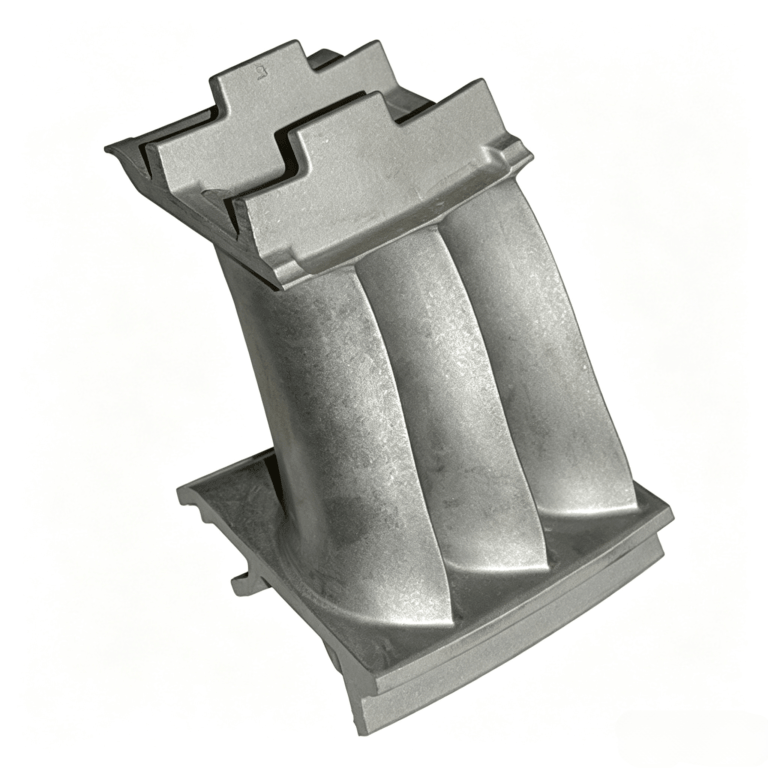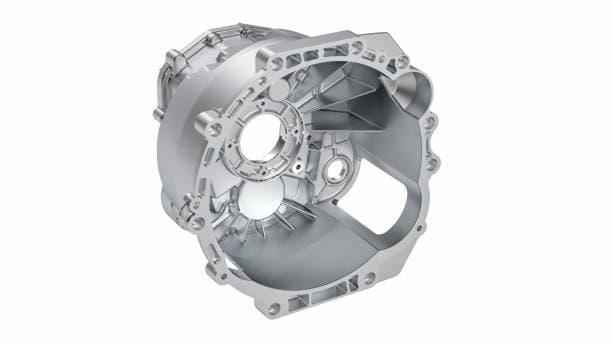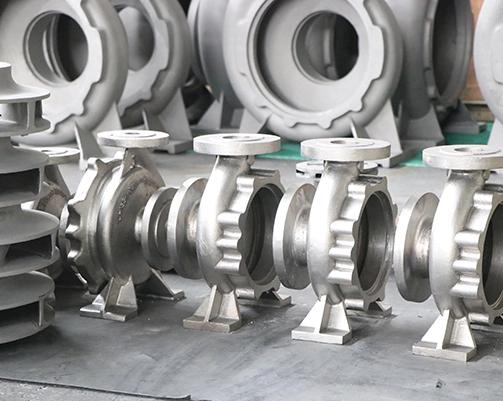
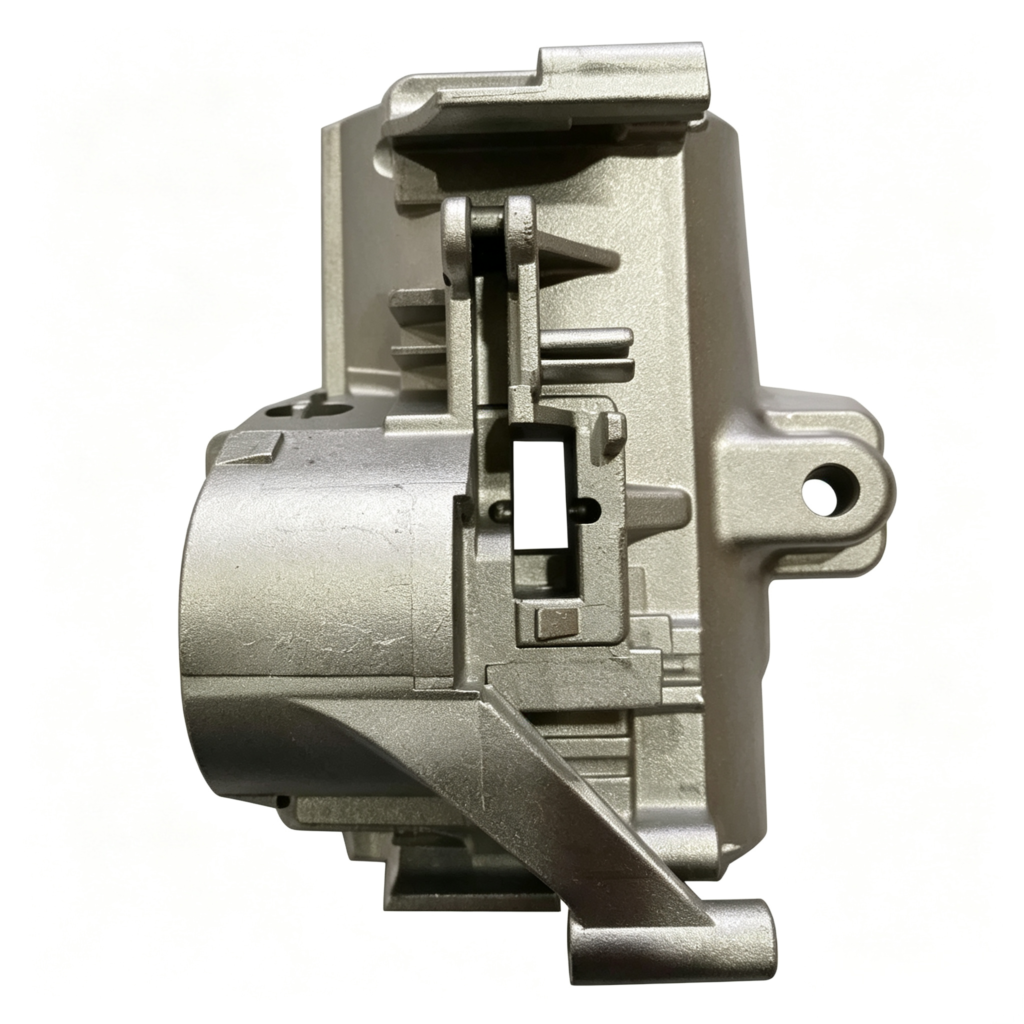
Zinc Alloy Castings Spare Part
1. Product Overview Zinc alloys are alloys based on zinc with the addition of aluminium, copper, magnesium, and other elements. Zinc has a density of approximately 7.14 g/cm³ and a melting point…
1. Product Overview
Zinc alloys are alloys based on zinc with the addition of aluminium, copper, magnesium, and other elements. Zinc has a density of approximately 7.14 g/cm³ and a melting point of 419.5℃. Zinc alloy castings are components produced by casting methods. With outstanding advantages such as low melting point, excellent fluidity, superior castability, high dimensional accuracy, good surface quality, and easy surface finishing, they have become one of the most widely used non‑ferrous alloy materials in precision die‑casting applications.
Zinc alloy castings are mainly produced by pressure die casting, and can also be produced by gravity casting (sand casting, permanent mold casting). Thanks to their excellent formability and cost‑effectiveness, zinc alloy castings are widely used in automotive manufacturing, 3C electronics, hardware products, toys, sanitary ware, and many other fields. In 2024, the automotive sector accounted for 16.75% of demand, the 3C sector for 32.21%, and the hardware sector for 26.75%.
Our products strictly comply with national standards including GB/T 13818-2024 Die‑Casting Zinc Alloys, GB/T 13821-2023 Zinc Alloy Die Castings, GB/T 16746-2018 Zinc Alloy Castings, and GB/T 1175-2018 Cast Zinc Alloys. The performance and quality of our products meet internationally advanced levels.
2. Product Classification
2.1 By Alloy Series
Cast zinc alloys are mainly divided into the following two major series by composition and performance:
(1) Zamak Series (Zinc‑Aluminium‑Copper‑Magnesium Alloys)
The Zamak series is the classic Zn‑Al‑Cu‑Mg quaternary casting alloy, with aluminium content of about 3.5‑4.3%. It is the most commonly used die‑casting zinc alloy, known for precision die casting, dimensional stability, and excellent surface appearance. This series mainly includes:
- Zamak 3 (ZL3/ZL0400/ZnAl4) : Zinc content about 96%, aluminium content about 4%. This alloy offers the best castability and dimensional stability; over 70% of zinc alloy die‑cast products use this grade.
- Zamak 5 (ZL5/ZL0410/ZnAl4Cu1) : Zinc content about 95%, aluminium about 4%, copper about 1%. The higher copper content gives it superior strength and hardness compared to Zamak 3, though with slightly lower ductility.
- Zamak 2 (ZL2/ZL0430/ZnAl4Cu3) : Highest copper content (2.7‑3.3%), providing the highest strength and hardness in the Zamak series.
(2) ZA Series (High‑Aluminium Zinc‑Base Alloys)
The ZA series includes high‑aluminium zinc alloys, with aluminium content ranging from 8% to 27%. These alloys offer higher strength and hardness; ZA27 in particular has strength that surpasses almost all cast non‑ferrous alloys and cast iron, while still maintaining good ductility and toughness. The series mainly includes:
- ZA8 (ZnAl8Cu1) : Aluminium 8.2‑8.8%, combining good castability and mechanical properties.
- ZA12 (ZnAl11Cu1) : Aluminium about 11%, with excellent strength and wear resistance.
- ZA27 (ZnAl27Cu2) : Aluminium about 27%, offering the highest strength and hardness.
ZA alloy castings are mainly used for wear‑resistant parts and are the best alternative to bronze and brass.
2.2 By Casting Process
Zinc alloy castings are classified by casting process into the following main categories:
- Pressure Die Casting: The most important and widely used casting method for zinc alloys. With low melting point and good fluidity, zinc alloys are highly suitable for die casting, capable of producing thin‑walled, complex‑shaped precision castings.
- Gravity Casting: Includes sand casting, plaster mold casting, and permanent mold casting, suitable for complex, larger components.
- Squeeze Casting: Solidification under pressure produces dense microstructures with excellent mechanical properties.
- Centrifugal Casting: Suitable for rotational parts such as tubes and rings.
3. Typical Product Grades and Technical Parameters
3.1 Zamak 3 (ZL3) Die‑Cast Zinc Alloy
Zamak 3 is the most widely used die‑cast zinc alloy, accounting for over 70% of all zinc alloy die‑cast products. It offers excellent castability, dimensional stability, and good mechanical properties.
| Parameter | Value / Description |
|---|---|
| Material Grade | Zamak 3 (ZL3/ZL0400/ZnAl4) |
| Main Chemical Composition | Zn balance (~96%), Al 3.8‑4.2%, Cu ≤0.03%, Mg 0.035‑0.06% |
| Density | Approx. 6.6‑6.8 g/cm³ |
| Tensile Strength | 268‑283 MPa |
| Yield Strength | 208‑228 MPa |
| Elongation | Approx. 3‑11% |
| Brinell Hardness | 82‑97 HB |
| Impact Toughness | 43‑56 J |
| Fatigue Strength (5×10⁸ cycles) | 48 MPa |
| Casting Method | Hot‑chamber die casting, cold‑chamber die casting |
| Service Temperature Range | Room temperature to 100℃ |
Key Features:
- Best castability and dimensional stability.
- High surface finish, suitable for parts requiring good appearance.
- Excellent electroplating, painting, and other surface finishing properties.
- Good creep resistance.
Typical Applications: Automotive components, 3C electronic housings, toys, locks, sanitary ware, and hardware.
3.2 Zamak 5 (ZL5) Die‑Cast Zinc Alloy
Zamak 5 has increased copper content (0.7‑1.1%) compared to Zamak 3, providing significantly higher strength and hardness.
| Parameter | Value / Description |
|---|---|
| Material Grade | Zamak 5 (ZL5/ZL0410/ZnAl4Cu1) |
| Main Chemical Composition | Zn balance (~95%), Al 3.8‑4.2%, Cu 0.7‑1.1%, Mg 0.035‑0.06% |
| Density | Approx. 6.7‑6.9 g/cm³ |
| Tensile Strength | Approx. 310‑330 MPa |
| Yield Strength | Approx. 240‑260 MPa |
| Elongation | Approx. 2‑4% |
| Brinell Hardness | Approx. 91‑100 HB |
| Casting Method | Hot‑chamber die casting, cold‑chamber die casting |
| Service Temperature Range | Room temperature to 100℃ |
Key Features:
- Higher strength and hardness than Zamak 3.
- Better wear resistance than Zamak 3.
- However, slightly lower ductility, which may affect bending, riveting, and other forming operations.
Typical Applications: Automotive parts, mechanical parts, structural components, and high‑strength hardware requiring higher strength.
3.3 Zamak 2 (ZL2) Die‑Cast Zinc Alloy
Zamak 2 has the highest copper content (2.7‑3.3%) in the Zamak series, offering the highest strength and hardness.
| Parameter | Value / Description |
|---|---|
| Material Grade | Zamak 2 (ZL2/ZL0430/ZnAl4Cu3) |
| Main Chemical Composition | Zn balance, Al 3.8‑4.2%, Cu 2.7‑3.3%, Mg 0.035‑0.06% |
| Density | Approx. 6.8‑7.0 g/cm³ |
| Tensile Strength | Approx. 350‑400 MPa |
| Brinell Hardness | Approx. 100‑106 HB |
| Casting Method | Hot‑chamber die casting, cold‑chamber die casting |
| Service Temperature Range | Room temperature to 100℃ |
Key Features:
- Highest strength and hardness in the Zamak series.
- Excellent wear resistance.
- However, lower ductility; not recommended for parts subject to impact loads.
Typical Applications: High‑strength structural parts, wear‑resistant parts, mold components.
3.4 ZA27 High‑Aluminium Zinc‑Base Alloy Castings
ZA27 has the highest aluminium content and highest strength in the ZA series. It is an ideal replacement for tin bronze in high‑load bearing and wear‑resistant applications.
| Parameter | Value / Description |
|---|---|
| Material Grade | ZA27 |
| Main Chemical Composition | Zn balance, Al ~27%, Cu ~2% |
| Density | Approx. 5.0 g/cm³ (about 25% lighter than conventional zinc alloys) |
| Tensile Strength | 350‑450 MPa |
| Yield Strength | Approx. 250‑350 MPa |
| Elongation | 1‑6% |
| Brinell Hardness | 110‑120 HB |
| Coefficient of Friction (against steel) | 0.0065 |
| Service Temperature Range | Up to approx. 150℃ |
| Casting Method | Sand casting, permanent mold casting, cold‑chamber die casting |
Key Features:
- Strength surpasses almost all cast non‑ferrous alloys and cast iron.
- Coefficient of friction lower than or equal to that of tin bronze; wear rate and surface temperature rise are significantly lower than tin bronze.
- Service life is 3‑5 times longer than tin bronze.
- Naturally lubricious and non‑sparking.
- Easy to machine, polish, electroplate, paint, or anodise.
Typical Applications: High‑load bearings, bushings, bearing shells, nuts, worm gears, and other wear‑resistant parts; transmission components for gearboxes, pneumatic parts, large bearings for mining equipment.
3.5 ZA8 Die‑Cast Zinc Alloy
| Parameter | Value / Description |
|---|---|
| Material Grade | ZA8 (ZL8/ZL0810/ZnAl8Cu1) |
| Main Chemical Composition | Zn balance, Al 8.2‑8.8%, Cu 0.9‑1.3%, Mg 0.02‑0.03% |
| Tensile Strength (sand cast) | Approx. 263 MPa |
| Tensile Strength (permanent mold) | 221‑255 MPa |
| Casting Method | Sand casting, permanent mold casting, die casting |
| Service Temperature Range | Up to approx. 150℃ |
3.6 Performance Comparison of Grades
| Grade | Density (g/cm³) | Tensile Strength (MPa) | Yield Strength (MPa) | Elongation (%) | Hardness (HB) | Key Features | Applicable Processes |
|---|---|---|---|---|---|---|---|
| Zamak 3 | 6.6‑6.8 | 268‑283 | 208‑228 | 3‑11 | 82‑97 | Widest use, dimensional stability | Die casting |
| Zamak 5 | 6.7‑6.9 | 310‑330 | 240‑260 | 2‑4 | 91‑100 | High strength, high hardness | Die casting |
| Zamak 2 | 6.8‑7.0 | 350‑400 | – | – | 100‑106 | Highest strength | Die casting |
| ZA8 | – | 263 | – | – | – | Good overall performance | Sand/Permanent mold/Die |
| ZA27 | 5.0 | 350‑450 | 250‑350 | 1‑6 | 110‑120 | Highest strength, wear‑resistant, bearing‑specific | Sand/Permanent mold/Die |
4. Detailed Casting Processes
4.1 Pressure Die Casting
Process Principle: Molten zinc alloy is injected into a metal die cavity at high pressure and high speed, and solidifies under pressure.
Process Features:
- High efficiency, high automation, suitable for mass production.
- Zinc alloys have low melting points (382‑386℃) and good fluidity, making them highly suitable for die casting.
- Capable of producing thin‑walled, complex precision parts with smooth surfaces.
- No iron pick‑up, no corrosion of the die, and no sticking during melting and casting.
- High dimensional accuracy and good surface quality.
- Two types: hot‑chamber and cold‑chamber die casting machines; thin‑walled small parts are often produced by hot‑chamber die casting.
Temperature Control:
- Zinc alloy melting point: 382‑386℃.
- Molten metal temperature in the die‑casting machine pot: 415‑430℃ (upper limit for thin‑walled/complex parts, lower limit for thick‑walled/simple parts).
- Metal temperature in central melting furnace: 430‑450℃.
Applicable Alloys: Zamak 3, Zamak 5, Zamak 2, ZA8, etc.
Applications: Automotive components, 3C electronic products, hardware, toys, and other high‑volume precision castings.
4.2 Gravity Casting
Process Principle: Molten metal fills the mold (sand, plaster, or permanent mold) by gravity and solidifies.
Process Features:
- Suitable for complex, larger components.
- High strength and good castability.
- Cooling rate has no significant effect on mechanical properties.
- Scrap and returns can be recycled; gating systems are simple.
- Not sensitive to overheating or remelting; low shrinkage and low porosity.
- Can be electroplated; can be finished by conventional methods.
Applicable Alloys: ZA27, ZA12, ZA8, Zamak series.
Applications: Large structural parts, bearings, bushings, etc.
4.3 Squeeze Casting
Process Principle: Mechanical pressure is applied to molten zinc alloy in the mold, causing it to solidify under pressure.
Process Features:
- Significantly reduces casting defects.
- Dense microstructure with excellent mechanical properties.
- Suitable for castings requiring high strength and density.
4.4 Casting Process Control Points
- Temperature Control: Strict control of melting and pouring temperatures is critical for ensuring alloy composition and casting quality.
- Refining Treatment: Adding refining agents such as ammonium chloride at 450‑470℃ can remove nearly 80% of oxides and 70% of intermetallic compounds from the molten zinc alloy.
- Composition Control: Impurity elements such as lead (Pb) and cadmium (Cd) must be strictly controlled to not exceed 0.01% each, to meet environmental and mechanical property requirements.
5. Performance Characteristics
5.1 Castability
Zinc alloys have excellent castability:
- Low melting point: 382‑386℃, low energy consumption, long die life.
- Good fluidity: Can fill complex cavities, suitable for thin‑walled precision parts.
- No iron pick‑up, no die sticking: Does not corrode the die during melting and casting.
- Low shrinkage: High dimensional accuracy.
5.2 Mechanical Properties
Different grades of zinc alloy castings meet different strength requirements:
- Zamak 3: Tensile strength 268‑283 MPa, yield strength 208‑228 MPa.
- Zamak 5: Tensile strength 310‑330 MPa, strength and hardness superior to Zamak 3.
- ZA27: Tensile strength 350‑450 MPa, hardness 110‑120 HB.
- Zinc alloys have good mechanical properties, hardness, and wet‑wear resistance.
5.3 Wear Resistance
ZA series high‑aluminium zinc‑base alloys have excellent wear resistance:
- ZA27 coefficient of friction (against steel) is only 0.0065.
- Coefficient of friction lower than or equal to tin bronze.
- Wear rate and surface temperature rise significantly lower than tin bronze.
- Service life is 3‑5 times longer than tin bronze.
- ZA alloy castings are the best alternative to bronze and brass.
5.4 Surface Finishing Performance
Zinc alloy castings can be subjected to various surface treatments:
- Electroplating: Chrome, nickel, zinc, copper plating, etc.
- Spraying/Painting: Available in various colours and textures.
- Chemical Conversion Coatings: Chromate treatment, phosphating.
- Polishing/Grinding: For high‑gloss surfaces.
- E‑coating: Improves corrosion resistance.
- PVD: Provides decorative and functional coatings.
5.5 Corrosion Resistance
- Cast zinc alloys have good atmospheric corrosion resistance.
- Corrosion resistance can be further improved by surface treatment.
- Note: Zinc is chemically active and is not suitable for use in strong acids, alkalis, seawater, or other highly corrosive environments.
5.6 Limitations
- Poor heat resistance: Service temperature generally does not exceed 100‑150℃.
- Low creep strength: Susceptible to creep deformation under long‑term loading.
- Low impact toughness: Not suitable for heavy impact loading.
- High coefficient of thermal expansion: Clearance with mating shafts should be slightly increased.
6. Heat Treatment
Heat treatment of zinc alloy castings is relatively simple and mainly includes the following:
6.1 Aging (Artificial Aging)
Zinc alloys naturally age at room temperature; artificial aging can accelerate property stabilisation.
- Purpose: Stabilise dimensions, increase hardness.
- Typical Process: Zamak 3 held at 100‑150℃ for several hours.
- Effect: Increases hardness and creep resistance.
6.2 Stabilisation Treatment
- Purpose: Eliminate casting stresses and stabilise dimensions.
- Typical Process: Heat to 100‑150℃, hold, then slowly cool.
6.3 Annealing
- Purpose: Relieve internal stresses and improve machinability.
- Typical Process: Heat to 250‑300℃, hold, then furnace cool.
7. Surface Finishing
Surface finishing is an indispensable step in the manufacturing of zinc alloy castings, not only enhancing appearance but also providing additional corrosion resistance and wear resistance.
7.1 Electroplating
Electroplating is one of the most common surface treatments for zinc alloy castings:
- Chrome plating: Increases hardness and wear resistance, reduces friction.
- Nickel plating: Improves corrosion resistance and appearance.
- Zinc plating: Improves corrosion resistance.
- Copper plating: Used as an undercoat to improve adhesion.
Note: Surface quality should be checked before electroplating to avoid defects such as porosity and cracking.
7.2 Chemical Conversion Coatings
- Chromate treatment: Forms a chromate conversion coating to improve corrosion resistance.
- Phosphating: Forms a phosphate conversion coating as a primer for painting.
7.3 Painting
- Powder coating: Provides a uniform, durable coating.
- Spray painting: Available in various colours and textures.
- E‑coating: Provides a uniform, highly corrosion‑resistant coating.
7.4 Mechanical Polishing
- Shot blasting / Sand blasting: Removes surface defects and provides a uniform matte finish.
- Grinding / Polishing: Provides a high‑gloss mirror finish.
7.5 Advanced Surface Treatments
- PVD (Physical Vapour Deposition) : Provides decorative or functional coatings.
- DLC Coating: Deposits a diamond‑like carbon film, significantly improving wear resistance, corrosion resistance, and self‑lubricating properties.
8. Quality Assurance and Inspection Standards
8.1 Applicable Standards
Our products strictly comply with the following national standards:
| Standard No. | Title | Status |
|---|---|---|
| GB/T 13818-2024 | Die‑Casting Zinc Alloys | Current |
| GB/T 13821-2023 | Zinc Alloy Die Castings | Current |
| GB/T 16746-2018 | Zinc Alloy Castings | Current |
| GB/T 1175-2018 | Cast Zinc Alloys | Current |
| GB/T 46786-2025 | Metallographic Examination of Zinc Alloy Die Castings | Current (effective 2026‑07‑01) |
Standard Adoption: GB/T 13821-2023 is modified in relation to ASTM B 240 Standard Specification for Zinc and Zinc‑Aluminium Alloy Castings and Die Castings.
8.2 Inspection Items
| Inspection Item | Test Method | Standard |
|---|---|---|
| Chemical Composition | Spectrometry, chemical analysis | GB/T 13818 |
| Mechanical Properties | Tensile test, hardness test | GB/T 13821 |
| Metallographic Structure | Metallographic examination | GB/T 46786-2025 |
| Internal Defects | X‑ray inspection | GB/T 13821 |
| Surface Quality | Visual inspection | GB/T 13821 |
| Dimensional Accuracy | CMM measurement | GB/T 13821 |
| Corrosion Resistance | Salt spray test | GB/T 13821 |
8.3 Quality Assurance Measures
- Raw Material Control: Strict control over purity and quality of zinc ingots and other alloying elements.
- Melting Process Control: Strict control of melting temperature, refining process, and compositional uniformity.
- Casting Process Control: Strict control of die‑casting parameters (temperature, pressure, speed, etc.).
- Impurity Control: Strict control of harmful impurities such as lead (Pb ≤0.003%) and cadmium (Cd ≤0.003%).
- Non‑Destructive Testing: Critical castings are subject to X‑ray inspection or fluorescent penetrant inspection.
- Batch Traceability: Each batch is supplied with a complete quality certificate.
8.4 Quality Commitment
- Third‑party inspection reports are supplied with each shipment.
- Each product carries a batch traceability code for quality issue tracing.
- 12‑month warranty period; free replacement for non‑human‑induced failures.
- Customer‑specific product files are maintained, with service status tracking available.
9. Application Fields
Zinc alloy castings are widely used in multiple industries due to their excellent overall performance and cost‑effectiveness.
9.1 Automotive Industry
The automotive sector is an important market for zinc alloy castings, accounting for 16.75% of demand in 2024:
Components:
- Automotive seat system components.
- Electronic system and antenna system components.
- Steering system and safety system components.
- Mechanical parts for cars and motorcycles.
- Automotive locks and interior trim.
Lightweight Contribution: With zinc as the main component, zinc alloy castings have moderate density and enable thin‑wall forming, high perceived quality, and excellent surface finishing.
9.2 3C Electronics (Computer, Communication, Consumer Electronics)
The 3C sector is the largest application market for zinc alloy castings, accounting for 32.21% of demand in 2024:
Products:
- Mobile phone casings and mid‑frames.
- Laptop shells, tablet frames.
- Digital camera bodies, audio housings.
- Telecommunications equipment housings.
- Connectors, communication products.
- Photographic equipment.
Advantages: Excellent surface finishing capabilities (electroplating, painting, etc.) provide a premium feel.
9.3 Hardware Products
The hardware sector is a traditional strong market for zinc alloy castings, accounting for 26.75% of demand in 2024:
Products:
- Lock products (smart lock housings, mechanical lock cylinders).
- Premium architectural hardware.
- Sanitary fittings (bathroom accessories, faucet handles).
- Tableware, ornaments.
- Zippers, metal buckles, watch cases.
9.4 Home Appliances and Consumer Goods
- Household appliance components.
- Toys.
- Everyday items, fans.
- Electromechanical products and parts.
9.5 Industrial Machinery
- Instrument housings.
- Various lifting equipment, machine tool bearings.
- Bushings, bearing shells, nuts, worm gears, and other wear‑resistant parts.
- Electrical and electronic castings.
9.6 ZA Series Specialised Applications (High‑Load Bearings and Wear Parts)
ZA series high‑aluminium zinc‑base alloy castings are mainly used for wear‑resistant parts:
- Various bushings and bearing shells.
- Nuts, worm gears.
- Gearbox transmission components.
- Pneumatic parts, shaft drive components.
- Large bearings for mining equipment.
10. Customisation Services
10.1 Dimensional Customisation
- Available in plates, bars, tubes, castings, and other forms.
- Single casting weight range: from a few grams to several tens of kilograms.
- Minimum wall thickness can reach 0.5‑1 mm.
- High dimensional accuracy to meet various precision requirements.
10.2 Material Customisation
- Different alloy grades (Zamak 3, Zamak 5, Zamak 2, ZA8, ZA12, ZA27, etc.) can be selected according to service conditions.
- Delivery states: as‑cast, aged, etc.
- Custom alloy compositions can be developed for special requirements.
10.3 Process Customisation
- Choice of die casting, gravity casting, squeeze casting, etc., based on required precision and batch size.
- One‑stop service from mold design, process development, to volume delivery.
- Various surface finishing options (electroplating, painting, PVD, DLC coating, etc.).
11. Usage Precautions
11.1 Selection Advice
- General purpose, high appearance requirements: Prefer Zamak 3 (widest use, dimensional stability).
- Higher strength requirements: Prefer Zamak 5.
- Highest strength requirements: Prefer Zamak 2.
- High‑load bearings / wear parts: Prefer ZA27.
- High‑temperature service (>100℃) : Zinc alloys are not recommended; consider aluminium or copper alloys.
- Strong acids/alkalis / seawater: Zinc alloys are not recommended.
11.2 Melting and Casting Precautions
- Strictly control melting temperature (415‑450℃) to avoid overheating.
- Use refining and degassing to reduce porosity defects.
- Strictly control impurity elements (Pb, Cd, etc.).
- For thin‑walled/complex parts, use upper temperature limits; for thick‑walled/simple parts, use lower limits.
11.3 Machining Guidelines
- Zinc alloys have excellent machinability.
- Control cutting temperature to avoid dimensional changes due to overheating.
- Surface treatment should be performed promptly after machining.
11.4 Storage and Transport
- Store in a dry, ventilated warehouse.
- Protect with rust‑proof paper or plastic film.
- Avoid contact with acids, alkalis, salts, and other corrosive substances.
- Protect against moisture and impact during transport.
11.5 Installation and Maintenance
- Pay attention to clearance; zinc alloys have a high coefficient of thermal expansion.
- Avoid long‑term use at high temperatures (>100℃) or in highly corrosive environments.
- Regularly inspect the integrity of surface coatings or platings.
12. Service and Support
- Technical Assistance: Free service‑condition analysis, alloy selection advice, and casting process scheme design.
- R&D Support: Joint development of new zinc alloy grades and customised casting processes according to customer special requirements.
- After‑Sales Tracking: Customer‑specific product files with service status follow‑up visits.
- Emergency Response: 72‑hour emergency channel for major industrial cities.
- Technical Cooperation: Assistance with machining process commissioning, surface treatment solution design, and failure analysis.
- Logistics: Custom wooden case shock‑proof packaging; global sea/air freight supported; transport insurance available.
- Quality Assurance: Each batch is supplied with material reports (chemical composition, mechanical properties); third‑party re‑testing is supported.
Need Custom Alloy Casting Parts?
Send us your drawings, samples, material requirements, quantity and application information. Our team will review your project and provide a suitable manufacturing solution.